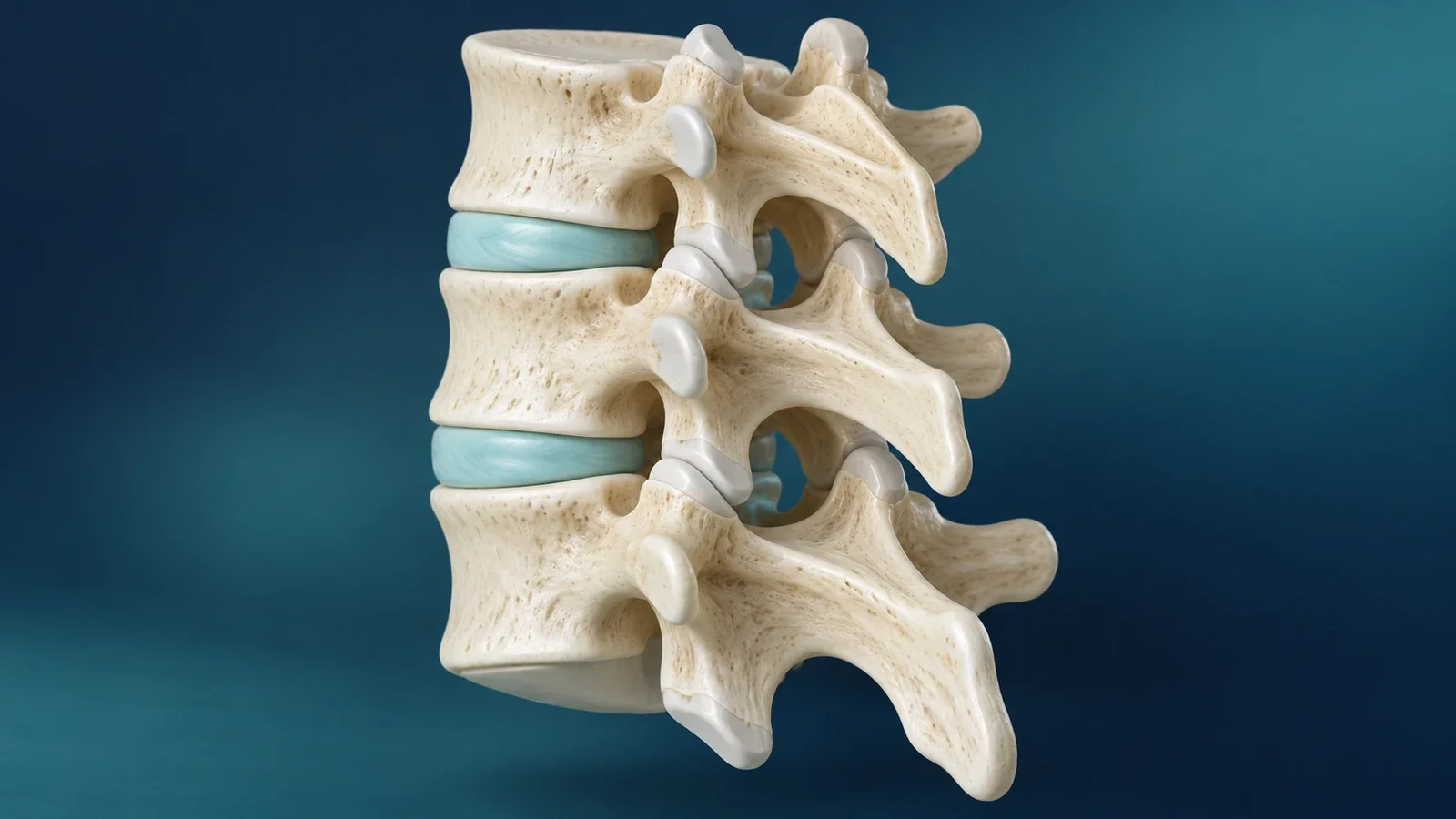
What are decompression and laminectomy?
Decompression is a general name for operations intended to reduce pressure on nerve tissue. Laminectomy involves removing the bony lamina at the back of a vertebra. Not every decompression is a full laminectomy. Bone, ligament and disc changes may be addressed to different extents according to the person's problem.
This page focuses on surgery considered for lumbar spinal stenosis. Decision criteria may differ for cervical stenosis and spinal cord involvement. Lower back and neck operations should therefore not be assumed to follow the same process. Planning combines symptoms, functional loss and neurological findings rather than relying on canal width on imaging alone.[1]
What symptoms can lumbar spinal stenosis cause?
Lumbar stenosis may cause leg pain, numbness and heaviness that worsen with walking or standing. Some people describe relief on sitting or bending forward. This pattern alone is not diagnostic. Circulatory problems, hip conditions and other nerve problems may also require consideration.
Why ask about walking distance?
Pain severity alone may not capture everyday impact. The extent to which moving around the home, shopping or walking to work is affected matters. Changes in walking distance can inform follow-up. People with similar MRI findings may have different levels of functional loss.
Neurological examination assesses strength, sensation and reflexes. New bladder control problems, saddle-region numbness or rapidly progressing weakness may change assessment priorities. These symptoms may require investigation of conditions including urgent nerve compression.
When is stenosis surgery considered?
Persistent walking limitation, marked functional decline and symptoms continuing despite appropriate non-surgical approaches may be discussed surgically. Progressive neurological findings are especially important. Not every image showing stenosis requires surgery; some people can be monitored or treated non-surgically. The reasoning should be explained understandably.
Assessment considers how long medicines, activity modification and rehabilitation were used and which symptoms changed. Merely having tried a treatment does not determine whether it was adequate. Its purpose, personal circumstances and disease progression are considered together. Discussion includes the burden of intervention as well as possible benefit.
What information is reviewed before surgery?
MRI can show structures related to the canal and nerves. Other imaging may sometimes be requested for bone detail or changes with movement. Investigation selection depends on the clinical question. Several narrowed levels in a report do not by themselves mean every level requires surgery.
Health and medicines
Heart and lung conditions, diabetes, bone health, previous surgery and blood thinners may affect planning. Anaesthetic assessment and other investigations are individualised. Doctors decide whether medicines should be stopped or doses changed. Another patient's preparation timetable should not replace the person's own plan.
How is space created for nerves?
Part of the bone or ligament contributing to narrowing may be removed to increase the space around nerves. Disc treatment may also be necessary in some patients. The levels and extent depend on compression location and spinal structure. This explanation does not teach operative technique.
Laminotomy can describe a more limited bony opening. Foraminotomy concerns widening the area where a nerve exits the spine. These terms may be used together in one patient but are not exact equivalents. Procedure names may appear in discharge or operative records and can be explained at review.
Is fusion added to every decompression?
No. Spinal fusion, which aims to create a bony union between two or more vertebrae, is a separate surgical decision. Factors include stability, slippage or deformity and the extent of planned bone removal. Screws and rods are not compulsory parts of stenosis surgery.
Five-year results from the randomised Nordsten-DS trial compared decompression alone with additional instrumented fusion in selected patients with degenerative lumbar spondylolisthesis and stenosis. The research does not support adding fusion in every case within that patient group. Findings cannot be directly generalised to every form of instability or all spinal diseases.[2]
Specific questions can clarify the distinction: which finding suggests a need for stabilisation, is decompression alone an option, and what additional burden does fusion involve? Decisions should not be based on implant numbers or method names without understanding the personal rationale.
Surgical aims and outcome limitations
Decompression targets symptoms identified as related to nerve compression. Elimination of pain throughout the lower back should not be expected. Other pain sources or longstanding nerve involvement may coexist. Patient priorities and functions surgery may change should be discussed beforehand.
More space on imaging and equal improvement in every symptom are different outcomes. Recovery assessment considers walking, strength, sensation and everyday life together. Another person's surgical experience is insufficient to predict an individual's result.
What are the possible risks?
Assessment covers infection, bleeding, cerebrospinal fluid leakage, nerve injury, persistent symptoms and repeat intervention. Spinal stability issues may also matter in some people. Coexisting conditions and operative extent affect individual risk assessment. No single complication rate is provided here.[3]
New weakness, uncontrolled changes in pain, impaired bladder or bowel control, fever or wound discharge after surgery should prompt contact with the team. Sudden, serious neurological changes require emergency assessment. Discharge instructions should explain when and where to seek help.
How are recovery and rehabilitation planned?
Starting to walk and returning to everyday tasks depend on operative extent and personal condition. Fall risk, medicines and mobility are considered. An expectation of a short hospital stay does not mean everyone follows the same course. Home support and transport can be discussed in advance where needed.
Rehabilitation depends on individual needs. Exercise type and intensity should not be increased independently. Changes in previously difficult tasks can be described at review. Persistent pain or numbness is interpreted alongside examination and recovery; a single day's symptoms cannot establish a definitive surgical outcome.
Questions about spinal stenosis assessment
Does every narrowed area explain the symptoms?
Multiple narrowed levels do not necessarily contribute equally to symptoms. Examination and changes in daily function are therefore compared with images. Patients can ask why a particular level is included in the plan and how other findings will be monitored. Clinical agreement comes before a technique's name.
How is monitoring arranged if surgery is deferred?
Non-surgical monitoring should specify which symptoms to record and which changes require earlier review. Worsening walking, new weakness and bladder control changes can be discussed specifically. Monitoring does not mean ignoring new symptoms; the plan is updated according to clinical changes.
Explaining home and work circumstances helps create a realistic recovery plan. Prolonged standing, lifting and stair use place different demands on function. Concrete examples of changes in these tasks can be shared at review. Exercise and work adjustments should follow the individual plan.
Assessment for spinal stenosis surgery in İzmir
Before discussing spinal stenosis surgery, prepare images, previous treatment records and notes on walking changes. Details of Op. Dr. Ozan Ganiüsmen's practice in İzmir are on the contact page. Whether decompression or stabilisation is needed cannot be determined without assessing clinical findings. This article provides general information.
Scientific and Institutional Sources
- AANS — Lumbar Spinal Stenosis
Professional society patient information; symptoms and decompression principles
- Nordsten-DS — Decompression alone or with fusion for degenerative lumbar spondylolisthesis: five year follow-up
Randomised comparison limited to degenerative slippage and stenosis; not generalised to other instability
- NHS — Lumbar decompression surgery
Institutional patient information; surgical scope, risks and monitoring