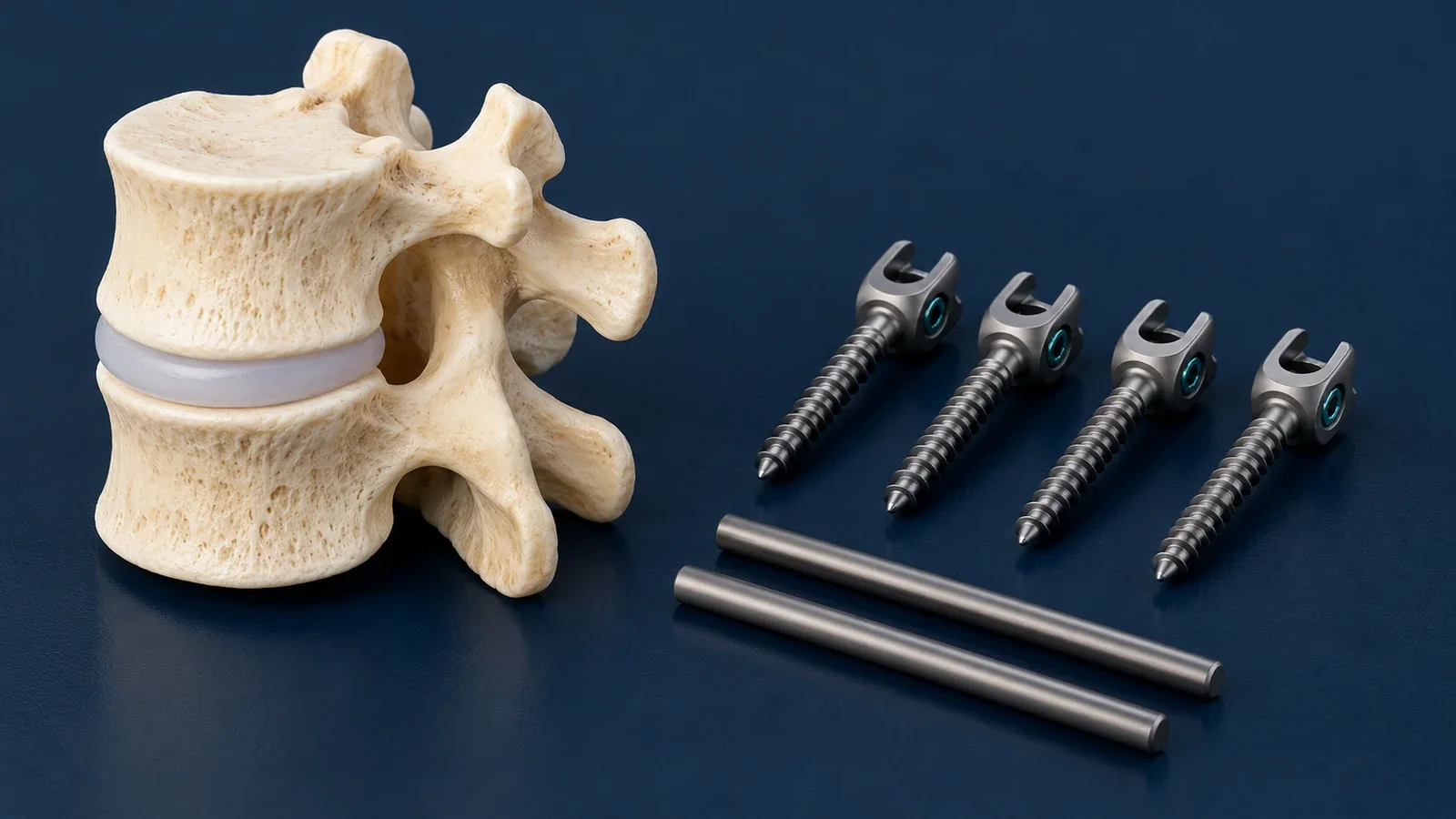
What is lumbar spondylolisthesis?
Lumbar spondylolisthesis means displacement of one vertebra relative to an adjacent one. It differs from a lumbar disc herniation, which describes protruding disc tissue, although both can coexist. Slippage sometimes narrows the spaces containing nerves and sometimes is found on imaging without major symptoms. Presence alone therefore does not determine surgery. Location, movement-related features and the person's complaints are assessed together. The written imaging report is only one part of an individual treatment plan and cannot independently identify the most appropriate option.[4]
Causes and different types
Degenerative changes, a defect in the posterior bony elements or other structural causes may contribute to slippage. Age-related degenerative slippage differs from stress injury in young athletes. Trauma and effects of previous surgery also require separate assessment. Identifying cause helps explain appropriate loading and the problem surgery might target. Not every slip progresses, and not every symptom necessarily comes from it. The doctor may compare earlier images with the development of symptoms over time.
Which symptoms may occur?
Back pain, buttock or leg radiation, numbness and standing difficulty may occur. Associated stenosis can reduce walking. Symptoms vary with posture and activity but are not specific. Investigate roots, hips and other sources. Concrete task examples help. Intensity and displacement are not always parallel. Record new deficits separately from old pain.[4]
Diagnosis and movement assessment
Static images and movement
Examination includes strength, sensation, walking and function. X-rays show alignment; MRI shows neural relationships. Some need movement studies, not identical tests for all. Explain instability clinically rather than as a word alone. Review operative records. The aim is the symptom-related problem, not listing every image change.
What treatment options exist?
Load modification, medicines and tailored rehabilitation may suit some. Other options depend on compression and symptoms. Surgery may decompress and sometimes stabilise or fuse. Fusion is not compulsory for every degenerative slip. Selected studies assess decompression alone and cannot transfer to fractures, marked deformity or other instability. Selection follows findings and aims.[1][2]
Which changes matter during follow-up?
Assess walking, work and movement alongside pain. Fusion and implants may need separate monitoring. Work, driving and lifting advice is individual. New weakness, urinary problems or genital sensory loss may need emergency care. Contact the team rather than changing medicines or exercise independently. Intervals depend on symptoms and treatment.[3]
Decision and follow-up questions
Why is displacement alone insufficient?
The amount of displacement provides structural information, but does not by itself describe nerve compression, the source of pain or everyday function. Two people with similar measurements may have different symptoms. The doctor compares position and any movement-related change with examination findings. An image resembling another patient's does not mean the same operation is necessary. Treatment decisions therefore consider several findings together rather than treating the measurement as an independent indication.
What should you ask about fusion?
Ask which problem the procedure addresses, why decompression alone is not considered sufficient and how bony union will be monitored. The presence of an implant does not mean the intended fusion has already completed. Share physical work demands and the need for help at home before treatment. Deciding from an operation's name alone, without understanding preparation and follow-up, may overlook the person's practical needs and the purpose of the proposed components.
Why assess exercise separately?
No movement can be said to increase slippage in every case or correct it in every case. Symptoms, neurological findings and structural characteristics are considered. Tolerated loading may change during follow-up. Discuss why a programme is difficult to perform rather than ignoring new pain or strength changes. Temporary strain and continuing neurological deterioration are different matters. The aim is to support safe function suited to the individual rather than adopt a general exercise label.
Sharing medicines and health records
Diabetes, bone health problems, smoking and medicines should be discussed during treatment assessment. These may affect the suitability of non-surgical care as well as an operative plan. Prescription medicines should not be stopped without medical advice. If a report explains a procedure previously recommended elsewhere, bring it so the rationale can be understood again. Different opinions should be clarified using individual findings, rather than assuming that different technique names alone establish a contradiction.
Discussing lumbar slippage in İzmir
People attending Op. Dr. Ozan Ganiüsmen for spondylolisthesis assessment in İzmir can bring previous X-rays and MRI images. Describe which positions increase pain, walking capacity and responses to earlier treatments. Lumbar slippage surgery is not identical for everyone; ask which problem it targets and why fusion may be required. Understand the personal relevance of monitoring, rehabilitation and surgical alternatives before choosing treatment. Work, available support at home and care expectations also belong in this discussion.
Scientific and Institutional Sources
- RNOH NHS — A Patient’s Guide to Low Back Fusion Surgery
Institutional patient information; fusion, implants and individual planning
- Nordsten-DS — Decompression alone or with fusion for degenerative lumbar spondylolisthesis: five year follow-up
Randomised comparison limited to degenerative slippage and stenosis; not generalised to other instability
- Northern Care Alliance NHS — Spinal fixation surgery: physiotherapy advice
Institutional patient information; healing and individual follow-up; no standard exercise timetable reproduced
- NHS — Spondylolisthesis
Slippage, symptoms and individual treatment options.