What is spinal stenosis?
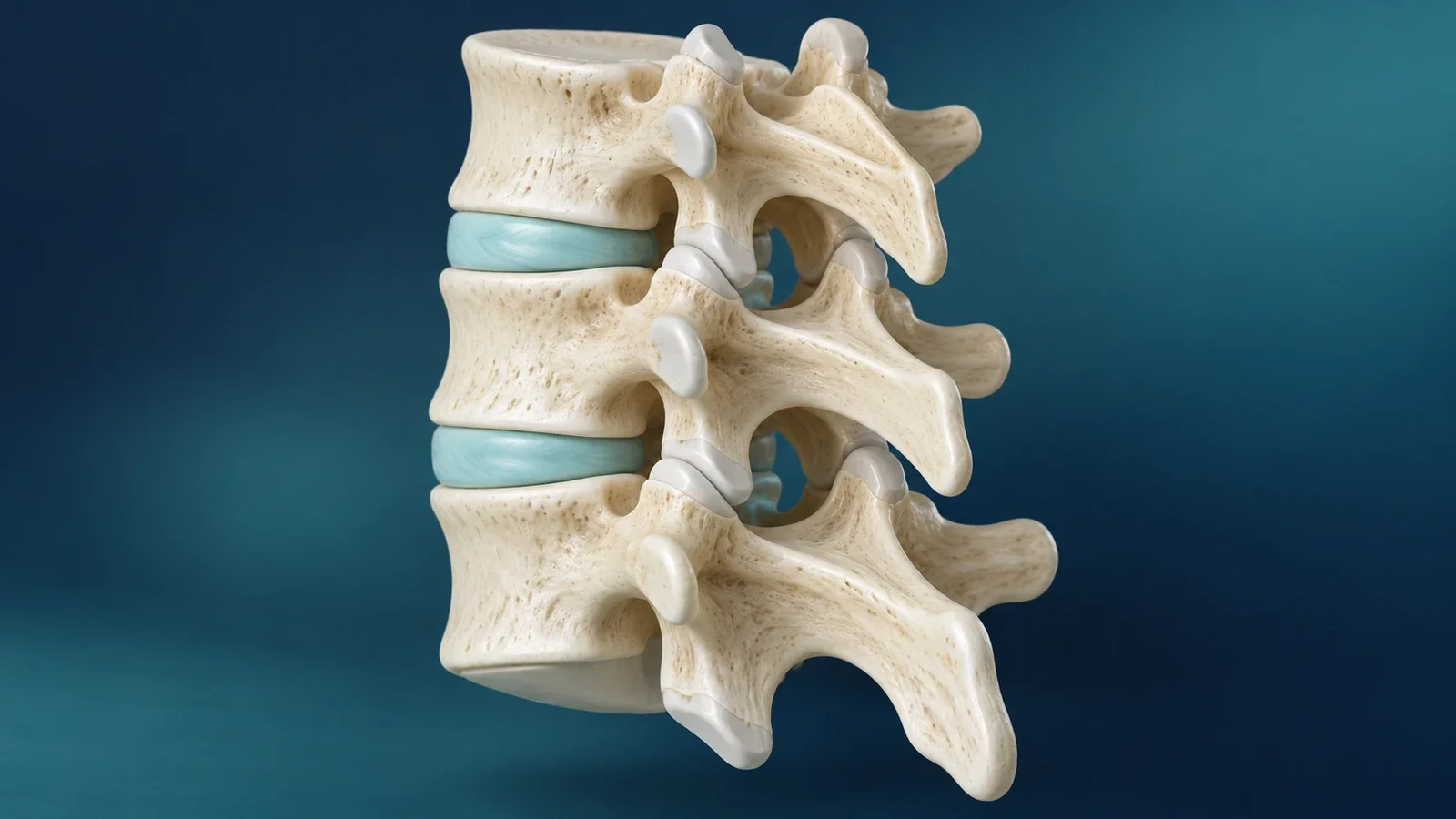
Spinal stenosis describes a clinical condition associated with narrowing of spaces through which the spinal cord or nerves pass. Lumbar stenosis refers to the lower back. Cervical narrowing may affect the cord itself, so the conditions do not produce identical symptoms despite similar names. This page focuses mainly on lumbar disease; cervical stenosis and myelopathy are discussed separately among neck conditions. Narrowing on imaging alone does not determine disease severity or whether an operation is needed. Symptoms, examination and everyday effects must be considered together.[1]
How does narrowing develop?
Age-related changes in discs and joints, thickening of ligaments and bony projections may reduce available canal space. Some people have a naturally narrower canal. Spondylolisthesis or other structural changes can coexist. However, one imaging finding should not automatically be accepted as the definite cause of every symptom. Assess whether narrowing is central or in the nerve exit area. Several levels may be involved; examination and images together help identify which are related to the current complaints.
What symptoms can lumbar stenosis cause?
Lumbar spinal stenosis may cause walking- or standing-related leg pain, numbness, heaviness and reduced distance, sometimes relieved by sitting or bending forward. This is termed neurogenic claudication. Vascular, hip and peripheral nerve disease may resemble it. Not every walking limitation is spinal. Back pain may occur but does not measure compression. Describe triggers and response to rest.[1]
Examination and imaging
The clinical meaning of MRI
Assess strength, feeling, reflexes and walking. MRI shows neural spaces and soft tissue; other tests may assess bone or movement. Reported narrowing does not always match walking capacity. Compare old images. Dexterity and balance matter if neck involvement is suspected. Diagnosis includes progression rather than report wording alone.[4]
Non-surgical and surgical options
Plan around function and neurological findings. Activity adjustment, medicines and rehabilitation may suit selected people without removing all bony changes. Persistent disability or significant compression may prompt decompression. Fusion is not compulsory. Studies compare decompression with added fusion in selected degenerative slippage and stenosis, not every instability. Explain individual rationale and scope.[2][3]
Risks, monitoring and urgent warnings
Surgical discussion includes infection, bleeding, nerve effects, fluid leakage and persistent symptoms. Non-operative reviews also monitor strength, walking and function. New urinary retention, bladder or bowel control changes, genital sensory loss or rapidly progressive weakness require emergency assessment. Do not wait for review. New hand and walking changes in cervical stenosis need prompt reporting. Follow the personal plan.
Questions about decisions and monitoring
Are stenosis and herniation interchangeable?
No. Herniation is displaced disc tissue; stenosis is reduced neural space. A disc may contribute but is not the only cause. This distinguishes fragment-targeting methods from broader decompression. Ask which structure is targeted and why the extent was selected.
How can walking distance be described?
There is no need to measure an exact number of metres. Examples include how often the person stops on the way to a nearby shop, whether sitting is needed and what difficulties occur on the return journey. Explain differences between level ground and slopes, whether leg symptoms are one- or two-sided and how rest changes them. Such a record helps identify meaningful functional goals, rather than being used to calculate the severity of disease independently.
What matters besides pain?
Falls, imbalance, difficulty putting on shoes or needing support on steps can be shared at review. Compare how the same everyday activity is performed after treatment. New weakness remains important even if pain has decreased. The personal plan should explain which movements can continue and which changes need early reporting. The aim of monitoring is not merely to change words in an imaging report, but to assess changes in the person's daily life.
Explaining the intervention's goal
If an intervention is discussed, ask whether lower back pain and nerve-related leg symptoms are separate treatment targets. Changes in standing tolerance or the need for support while walking may be outcomes that matter to the patient. Knowing beforehand how the intended contribution will be monitored makes later reviews more concrete. If more time or further explanation is needed before deciding, that should also be expressed during the consultation.
Preparing for stenosis assessment in İzmir
Before a consultation with Op. Dr. Ozan Ganiüsmen in İzmir, note when symptoms begin during walking and whether sitting changes them. Earlier MRI, treatment records and a medicine list support assessment. The aim is not to choose an operation in advance, but to understand how spinal nerve compression affects daily life. Mention slippage or neck symptoms too. Clarify which option targets which complaint, the alternatives and changes that should be reported without waiting.
Scientific and Institutional Sources
- AANS — Lumbar Spinal Stenosis
Professional society patient information; symptoms and decompression principles
- Nordsten-DS — Decompression alone or with fusion for degenerative lumbar spondylolisthesis: five year follow-up
Randomised comparison limited to degenerative slippage and stenosis; not generalised to other instability
- NHS — Lumbar decompression surgery
Institutional patient information; surgical scope, risks and monitoring
- NHS — Cervical spondylosis
Distinguishing cervical spinal cord involvement.