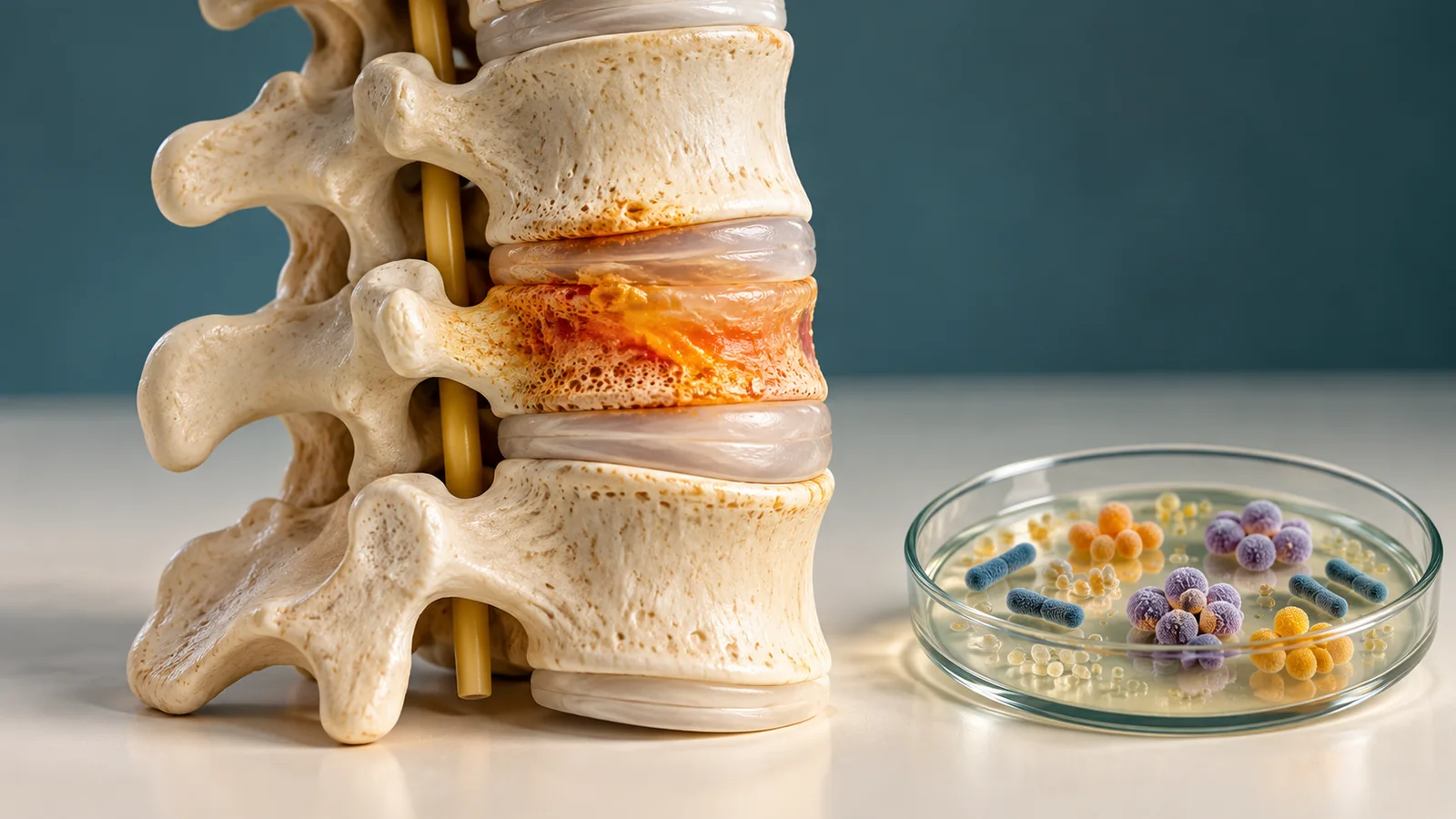
Which structures can spinal infection affect?
Spinal infections can affect vertebral bone, the intervertebral disc or spaces around nerve tissue. Discitis and vertebral osteomyelitis are terms used in this context. An epidural abscess has particular importance because of potential compression. These conditions are not assessed in the same way as ordinary muscular pain. Site, organism, general health and neurological findings determine care. A change on one image cannot explain all aspects of an infection without appropriate clinical and laboratory assessment. Findings must be interpreted together to understand both the cause and its effects.[1]
How can infection reach the spine?
Microorganisms may travel through the blood from another site or reach the region in relation to some procedures. Immune conditions and treatments, diabetes, earlier infections and operations matter, but no obvious risk factor does not fully exclude infection. Bacteria, tuberculosis and other organisms may need different investigations and care. Share health records and earlier antibiotics. Recent procedures should not be concealed; investigating cause should proceed without blame.
Which symptoms raise concern?
Persistent back pain, movement discomfort or night pain may occur. Fever may be absent. Malaise or recent infection adds information. Weakness, sensory or bladder changes may indicate nerves. Waiting with analgesics alone is inappropriate then. Overlap prevents online diagnosis; suspicion guides testing.[1][4]
Blood tests and sampling
Why identify the organism?
Blood, inflammatory markers and cultures where appropriate are assessed. MRI examines tissues and compression. Sampling or image-guided biopsy may be needed. Antibiotic and sample timing reflect condition; serious deterioration or neurological emergencies must not be delayed. Previous medicines affect cultures. Seek assessment rather than self-starting antibiotics; interpret results together.[2]
How is care planned?
Spondylodiscitis treatment may include organism-specific antimicrobials and monitoring. This article gives no universal drug, dose or duration. Infection specialists, neurosurgeons and others collaborate. Compression, instability, selected abscesses or deterioration may need surgery for samples, infected tissue, decompression or support. Not every infection is operated on.[2][3]
How is recovery monitored?
Review pain, fever, movement and neurological function, interpreting laboratory results with the clinical picture. Imaging changes and recovery may not happen at the same speed; the team decides whether another scan is needed. Discuss adverse effects and practical ability to continue treatment. New weakness, inability to pass urine, altered consciousness or rapidly worsening general condition require emergency help. Do not stop treatment as soon as you feel better; continue the use and review plan in communication with the responsible team.
Questions about care and monitoring
Why does absent fever not guarantee safety?
Symptoms vary with the person and organism. Absence of fever does not make assessment unnecessary, particularly with continuing pain and risk factors. Conversely, not every night pain means infection. The consultation considers the whole pattern. Report any antipyretics or antibiotics already taken. A person should not make the decision independently from the presence or absence of one sign; these details contribute to selecting appropriate investigations.
Can blood improve while images remain changed?
Laboratory tests, examination and imaging do not measure the same thing. Some tissue changes may remain visible for longer. Interpreting one review report alone as either deterioration or recovery can therefore mislead. The doctor assesses pain, neurological function, general condition and test trends together. Learning why a repeat investigation was requested helps discuss its result more clearly and understand what information it adds to the ongoing clinical assessment.
Which records help?
Brief notes may record medicine use, adverse effects, new symptoms and review dates. Inform the responsible team if another doctor starts a medicine. Difficulties obtaining or taking treatment should not be concealed; the plan must be sustainable. Share problems instead of independently altering doses or duration. These records do not create a personal antibiotic prescription. They contribute to coordination and help the team understand what treatment has actually been possible.
Information across teams
When follow-up continues across institutions, written culture results and treatment records matter. Ask why a test is repeated or a medicine changed. Difficulty reaching the healthcare team should also be discussed as part of the plan. Reporting days when treatment could not be taken helps accurate assessment. Seek clarification from the responsible team rather than changing treatment independently on incomplete information. Communication allows different clinicians to work from the same history.
Records for assessment in İzmir
For suspected spinal infection assessment with Op. Dr. Ozan Ganiüsmen in İzmir, provide MRI files, cultures, blood tests and a list of antibiotics. Explain pain onset and previous infections, especially any cord or nerve compression findings. The aim is not simply to label an imaging change, but to assess the source and possible team approach. Emergency symptoms require hospital assessment without waiting for an appointment; planned consultation does not replace emergency care.
Scientific and Institutional Sources
- AANS — Spinal Infections
Disc, vertebral and epidural infections.
- IDSA — Native Vertebral Osteomyelitis Guideline
Diagnostic sampling, treatment and surgical indications.
- IDSA guideline publication
Publication record of the guideline, not an independent second study.
- NHS — Back pain
Seeking care for fever and neurological changes.