What is shunt surgery for hydrocephalus?
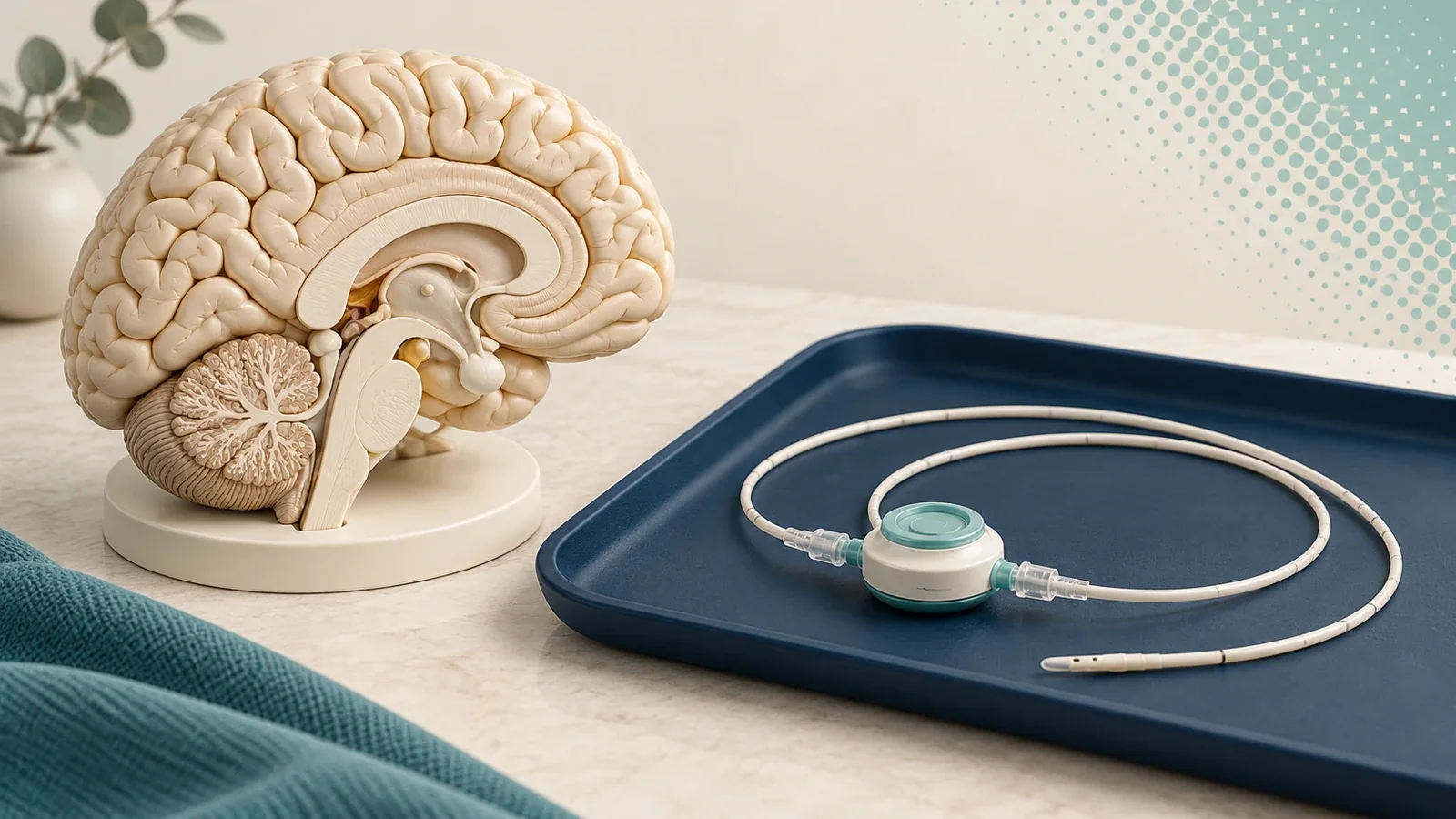
Shunt surgery diverts accumulated cerebrospinal fluid to another body cavity when circulation or absorption is impaired. Systems can include thin catheters and a flow-regulating valve. A common ventriculoperitoneal shunt carries fluid from brain cavities to the abdomen. Other drainage arrangements are also available. The system and placement considered appropriate depend on individual characteristics, rather than one design being assumed suitable for every patient. A shunt manages circulation rather than invariably eliminating the underlying cause.[1]
Hydrocephalus affects different ages and causes, including congenital problems, bleeding, infection and tumours. Enlarged ventricles alone do not determine surgery. Imaging, symptoms and examination are interpreted together. The aim extends beyond smaller cavities to pressure and fluid regulation, function preservation or symptom reduction. Contribution varies with cause and duration.
Who is assessed for a shunt?
Agreement between symptoms and imaging
Headache, nausea, altered consciousness or age-specific symptoms may require assessment. Rapid deterioration may demand urgent intervention. Other causes must also be considered. MRI or CT assesses ventricles and underlying cause, with additional tests where necessary. A single measurement does not decide treatment independently of health and daily function.[2]
Normal pressure hydrocephalus
Walking changes, cognitive difficulties and urinary control symptoms can occur, but overlap with other diseases makes diagnosis careful. Lumbar fluid removal or controlled drainage may help assess likely shunt response in selected patients. Tests do not remove every uncertainty. Improvement in one symptom does not establish equal improvement in the others. Coexisting conditions affect expectations.[3]
Are there alternatives?
Endoscopic third ventriculostomy may be considered in some types. It creates another fluid route under suitable anatomical conditions. Not every hydrocephalus is suitable. Obstruction location, age, previous treatments and cause matter. Shunts and endoscopy are not universally interchangeable. Explain individual reasons for the recommendation.[4]
Acute cases may require temporary external drainage in hospital. External ventricular drainage differs from long-term subcutaneous shunts and needs close supervision. The underlying obstructing disease may need separate treatment. Monitoring may suffice for some, while delaying necessary care can be serious. Non-operative suitability therefore depends on cause and clinical status.[5]
Preparation and expectations
Preparation includes examination, image review, anaesthetic assessment and necessary laboratory tests. Report abdominal operations, infections, medicines and allergies. The team arranges blood thinners and other medications; do not change care independently. Obtain fasting and admission guidance from the institution. Planning support and transport helps continuity at home.[6]
Clarify which symptoms relate to fluid circulation. Longstanding losses may not fully recover. Walking, cognition and continence can be monitored separately in normal pressure hydrocephalus. Baseline daily function notes from patients and relatives help comparison. Ask which change is expected and how it will be measured. Another patient's rapid improvement is not a personal benchmark.
How does a shunt system work?
Thin tubes transfer fluid between regions. A valve helps regulate flow under particular conditions. Systems usually lie beneath the skin, with individual route and positioning. Some valves can be adjusted externally using special tools; others differ. Adjustability does not remove maintenance needs. Each device has specific use and monitoring requirements.[6]
Function is assessed alongside symptoms and examination, with imaging or other tests when needed. Pressure settings and reviews differ. A shunt does not automatically prevent all daily activities, but individual limits should be explained. Keep model, setting and operative records for care elsewhere. Seek help for suspected problems rather than manipulating the system at home.
Possible risks of shunt surgery
Bleeding, infection, wound and anaesthetic problems may occur. Catheter or valve blockage, displacement and excessive or insufficient drainage are possible. Overdrainage may cause symptoms and fluid or blood around the brain. Abdominal complications may arise too. Some problems require revision, replacement or temporary alternative treatment.[7]
Long trouble-free operation does not exclude later problems. Malfunction symptoms vary and may resemble the original disease. Routine and emergency plans matter. Do not calculate personal risk from general online rates. The type of shunt, previous infections, operations already performed and the person’s health influence assessment. During the decision discussion, procedural risks should be considered together with the possible consequences of leaving hydrocephalus untreated. Weigh risks alongside consequences of untreated disease.
Living with a shunt and long-term monitoring
Hydrocephalus treatment extends beyond surgery day. Reviews assess symptoms, movement, cognition, wounds and images where necessary. The shunt setting may need to be considered again in some patients. Any adjustment is part of the clinical plan; the person should not attempt to alter the setting or manipulate the valve area themselves. Do not adjust or manipulate the valve independently. Carrying a card or document containing the shunt details can help the healthcare team during an emergency visit. Always inform a new healthcare service about the system.[7]
Share the model before MRI or another procedure. Magnetic-field and imaging rules, particularly for adjustable valves, depend on the model; ask whether checks are needed before and afterwards. Restrictions are not identical for all devices. Learn about electronics and magnets from manufacturers and the team. Do not independently abandon necessary tests; the team arranges appropriate conditions.[8]
Which symptoms require help?
New or worsening headache, repeated vomiting, altered consciousness, drowsiness, seizures, visual disturbance or rapid neurological decline may need emergency assessment. Report fever, redness or tenderness along the shunt and wound discharge. These do not always indicate malfunction but should not be dismissed without assessment. Children need age-specific family guidance.[7]
Should you wait for a scheduled review?
Marked deterioration may make waiting inappropriate. Share type, operation date, revisions and onset. A normal external appearance does not prove the whole system works. Examination and necessary tests distinguish causes.
Relatives who know the person’s usual condition can help identify changes. However, every headache or episode of forgetfulness should not be assumed to mean that the shunt has stopped working. Observations are used to provide accurate information for clinical assessment, rather than to diagnose the cause at home. Not every headache or memory lapse means failure. Record onset, duration and associated changes for the team. Agreeing where to seek care reduces emergency uncertainty. Home observation supplies accurate clinical information rather than establishing a diagnosis.
Hydrocephalus and shunt assessment in İzmir
Bring old images, operative reports, device card and current medicines for shunt surgery or monitoring assessment in İzmir. Op. Dr. Ozan Ganiüsmen can discuss symptoms, the existing system and contributions from relevant hydrocephalus centres. The aim includes understanding diagnosis, alternatives, monitoring and unexpected symptom plans, rather than only deciding whether to insert a shunt.
Scientific and Institutional Sources
- AANS — Hydrocephalus
Cerebrospinal fluid circulation, causes and general shunt principles.
- NHS — Hydrocephalus: Diagnosis
Imaging and clinical assessment; no decision based on one finding alone.
- North Bristol NHS — What is Normal-Pressure Hydrocephalus?
Normal pressure hydrocephalus symptoms and drainage tests.
- NHS — Hydrocephalus: Treatment
Shunting and selected endoscopic alternatives; not presented as equivalent.
- CUH — Cerebrospinal fluid drainage system
Temporary external drainage distinguished from permanent shunts.
- CUH — Normal pressure hydrocephalus specialist service
Shunt systems and preparation; institutional duration and response data not generalised.
- NHS — Hydrocephalus: Complications
Obstruction, infection and symptoms that may need emergency assessment.
- Memorial Sloan Kettering — Programmable VP Shunt
Programmable device models, magnets and informing teams before MRI; paediatric device distances not transferred to adults.