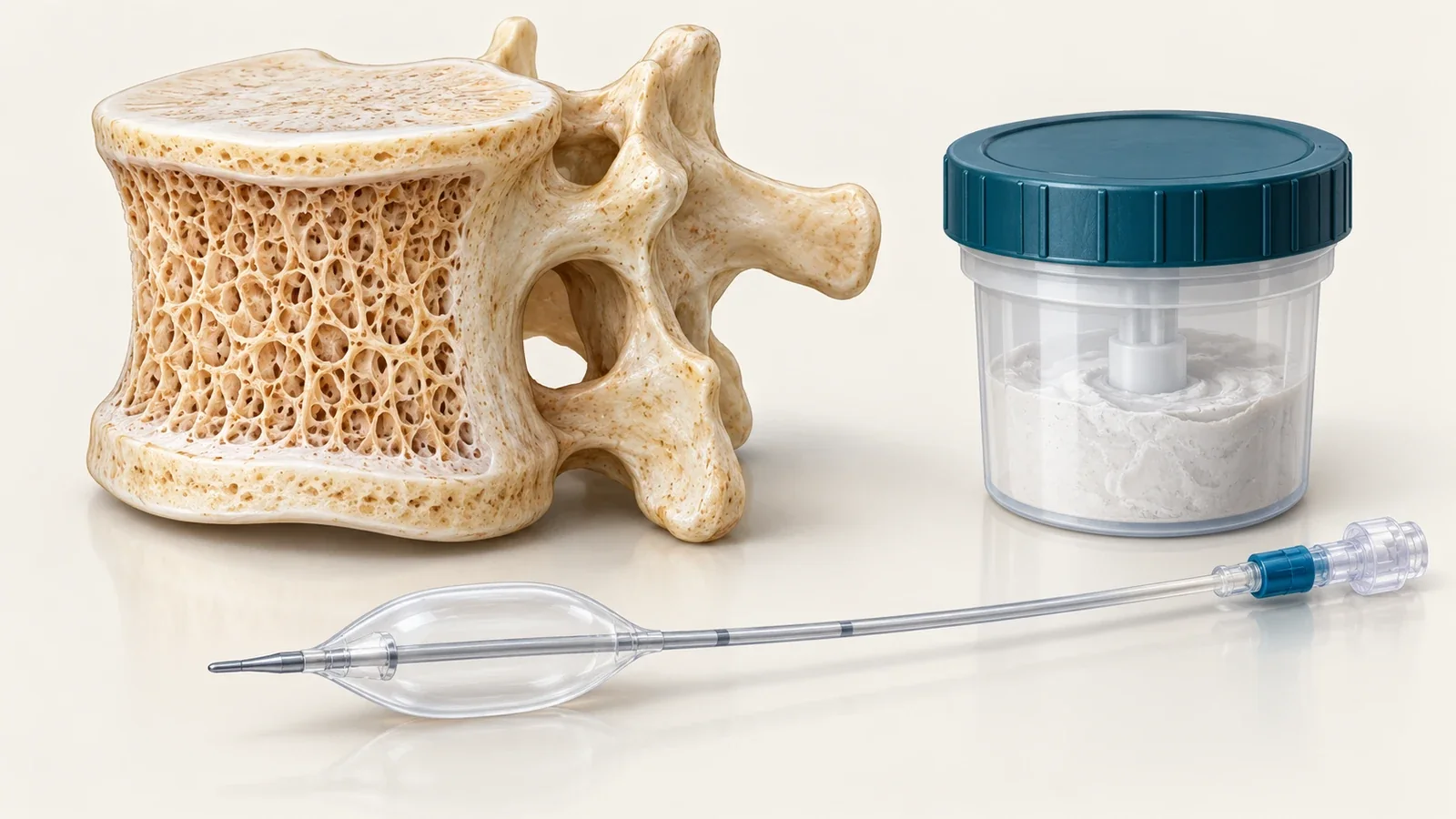
What is a vertebral compression fracture?
A vertebral compression fracture involves loss of vertebral body height or shape. Osteoporosis can predispose to it, but not every such fracture comes from osteoporosis. Trauma, tumours and other bone diseases may also require investigation. Cause, whether the fracture is recent and its relationship to nerve tissue change the treatment plan. An old compression deformity on imaging does not establish that new pain definitely comes from that site. Making this distinction in clinical assessment is important before attributing symptoms or choosing an intervention for the current problem.[1]
How may symptoms develop?
Sudden back or lower back pain may increase with movement. Some osteoporotic fractures develop without a clear fall. Height loss or posture change may become noticeable over time, while other fractures are found incidentally. New numbness, weakness or walking change alongside pain needs separate assessment for nerve involvement. Report cancer history, fever, recent trauma and medicines. The symptom pattern alone cannot reliably determine the fracture's cause, so these details are considered together with examination and imaging.
How are cause and fracture age assessed?
Examination and images together
Examine pain location, tenderness and neurological function. X-rays, CT and MRI answer different questions. MRI may inform recent injury or alternative causes. Bone density and osteoporosis investigations may be separate. Tumour or infection tests are sometimes needed, not identical testing for all. Identifying the painful vertebra matters before intervention; collapse alone is insufficient.[1][4]
What options exist without intervention?
Discuss analgesia, safe movement and selected bracing. Prolonged complete inactivity differs from fracture-appropriate activity. Loading and rehabilitation are individual. Osteoporosis needs a bone-health plan, with fall and home assessment where appropriate. Less pain at one level does not eliminate future fracture risk; underlying care continues.
When are vertebroplasty or kyphoplasty considered?
Vertebroplasty and kyphoplasty are not standard for every fracture. NICE emphasises clinical–imaging agreement in recent unhealed osteoporotic fractures with severe pain despite appropriate care. Controlled studies have not shown additional pain benefit in some populations. Discuss evidence limits, alternatives and suitability. Other fracture types may need stabilisation or decompression for separate reasons.[2][3]
Risks and monitoring
Cement procedures may involve leakage, infection, bleeding or nerve effects. Fracture itself can alter alignment and function. New weakness, bladder or bowel control problems or marked pain after serious trauma need prompt assessment. Monitor movement and bone health alongside pain. Follow individual advice rather than independently increasing loads or choosing prolonged bed rest.
Decision and follow-up questions
Why investigate new pain with an old fracture?
A compression deformity from an earlier fracture may remain visible on later images. New pain can arise from another vertebra, muscles or a different condition. Its location and onset are assessed alongside earlier films. Before another intervention is considered, ask which finding explains the present symptoms. A fracture mentioned in an old report does not predetermine the cause of every newly developing pain; assessment should reflect the person's current condition.
Why continue bone-health care?
An intervention on one fracture does not remove all risks from underlying osteoporosis. Other fractures, falls and medicines require separate review. Nutrition and movement advice should match personal health. Previous bone density measurements and fracture history contribute to assessment. If several specialties are providing care, sharing medicine lists helps their plans remain consistent. Bone health care therefore continues even when pain at the treated vertebra has decreased.
How is daily help planned?
Getting out of bed, dressing, climbing stairs and shopping may become difficult after a fracture. Describe how these tasks are performed as well as the level of pain. Share whether the person lives alone or has obstacles at home that increase fall risk. Ask the healthcare team what support is needed and how movement should progress during recovery. Do not assume everyone will return to normal activities at the same speed.
Discussing expectations
Returning immediately to every activity after a procedure is not suitable for everyone. Pain, balance and general health differ. Ask which limits apply to walking, stairs and household tasks. Increasing or decreasing support needs may alter the review plan. Understanding the specific symptom targeted by treatment also helps reduce misleading personal comparisons with another patient's result. Everyday arrangements should follow the individual's assessment rather than an assumed recovery timetable.
Compression fracture assessment in İzmir
People preparing for an İzmir consultation with Op. Dr. Ozan Ganiüsmen can share pain onset, any fall and earlier bone density results. Record osteoporosis medicines and other treatments too. Spinal fracture treatment concerns more than whether cement will be used: cause, neurological findings, safe movement and prevention of further fractures are considered together. Earlier films help distinguish new changes. Discuss the planned approach's purpose and the conditions for subsequent review clearly.
Scientific and Institutional Sources
- AANS — Vertebral Compression Fractures
Professional society patient information; causes, options and possible risks
- NICE TA279 — Percutaneous vertebroplasty and balloon kyphoplasty: recommendations
Technology assessment; recent unhealed osteoporotic fracture, severe pain and clinical–imaging agreement
- VERTOS IV — Vertebroplasty versus sham procedure for painful acute osteoporotic vertebral compression fractures
Sham-controlled randomised trial; no added pain benefit in the studied group, without claims for all fractures
- NIAMS — Osteoporosis
Bone health and fracture risk assessment.