Epilepsy and drug resistance
Assessment is not a decision to operate
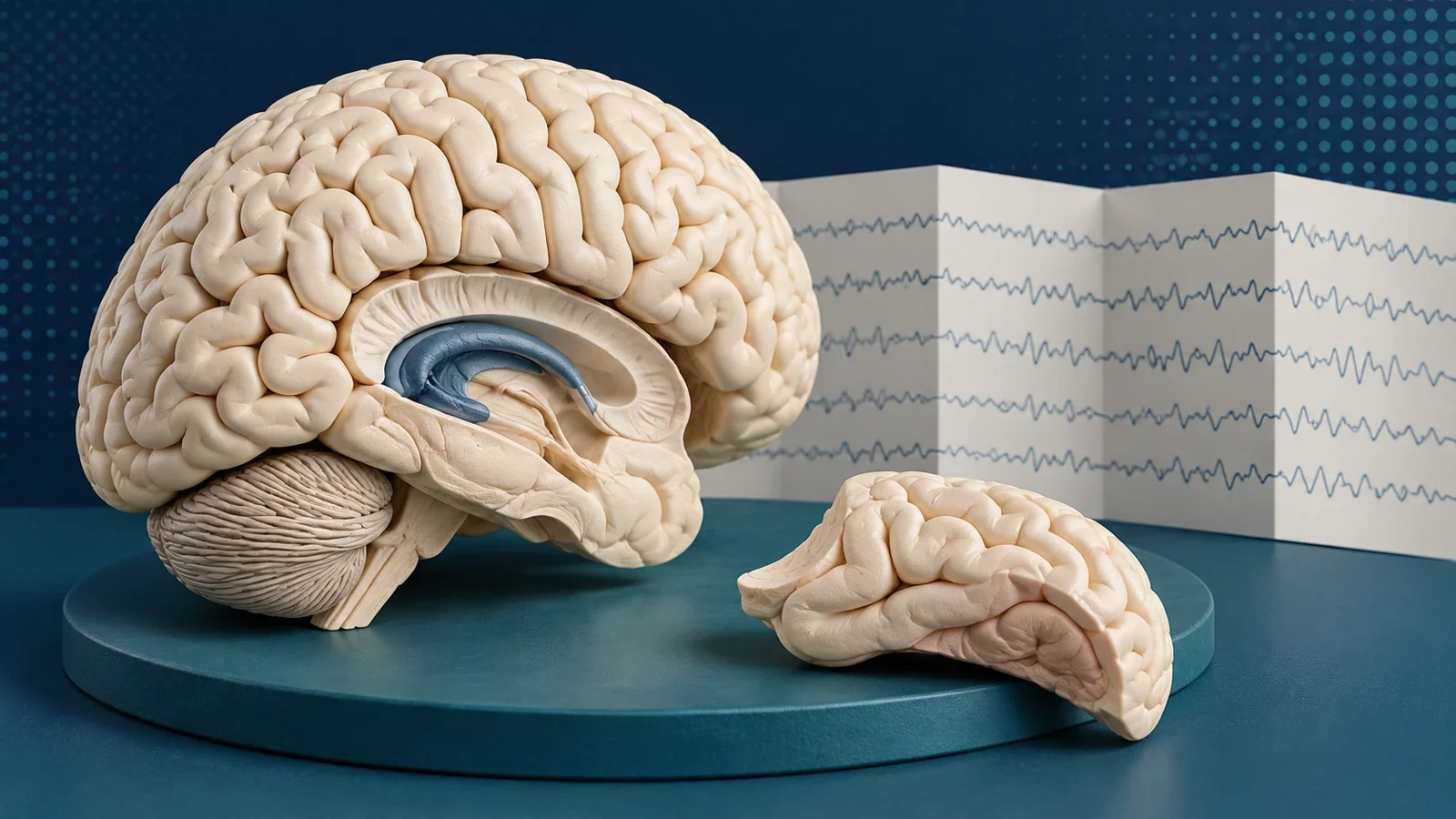
Epilepsy surgery assessment is specialist evaluation when seizures remain inadequately controlled. Not everyone with epilepsy is a surgical candidate. Continuing seizures despite appropriately selected and used medicines prompt assessment of drug resistance. Failure of two suitable regimens to achieve sustained seizure freedom is an important threshold. First review diagnosis, medicine suitability and use. Referral does not mean an operation will follow. The aim is to establish seizure origin, whether a removable focus exists and other options. Absence of an obvious MRI lesion does not automatically make evaluation unnecessary. Age, seizure type, development, daily life and other conditions matter. Unnecessary delays lasting years should be avoided in appropriate patients.[1][2][3]
Preparing questions in writing may help. Explain priorities for memory and language preservation alongside seizure effects. Additional counselling can be arranged if needed.
Seizures and safety
Rechecking the diagnosis
Seizures are not always whole-body convulsions. Brief staring, unresponsiveness, unusual sensations, automatic movements or one-sided contractions can occur. Fainting, sleep disorders and non-epileptic attacks may resemble them. Detailed history and witnesses help distinction. A seizure diary records frequency, duration, injuries and possible triggers. Suitable video provides additional information. Prolonged seizures, repeated seizures without recovery, a first seizure, breathing problems or serious injury require emergency help. Put nothing in the mouth and do not forcibly restrain the person; reduce surrounding hazards. Follow a pre-agreed individual emergency plan where available. Driving, swimming, working at height and bathing alone need personalised safety advice. Do not stop medicines independently. Explain practical difficulties and concerns so advice reflects actual daily activities and risks.[1][2][4]
Core specialist investigations
The focus and important functions
Video EEG compares observed attacks with electrical recordings. Epilepsy MRI protocols investigate structural causes. Neuropsychology establishes baseline memory, language and other cognitive functions. Functional imaging or additional tests may be needed selectively. Surgical candidacy depends on agreement among findings indicating a particular origin. A visible lesion alone does not establish that removal is suitable. Relationships to language, movement and memory need investigation. Conflicting results require explanation of uncertainty. Mental health, expectations and home support contribute to assessment. Tests aim to understand benefit alongside possible loss of function, not simply locate seizures. A multidisciplinary epilepsy meeting may review results. Patients should understand what the findings establish, what remains uncertain and how further information might affect the eventual treatment recommendation.[1][2][4][5]
Additional tests and non-surgical care
Uncertainty does not always require invasive tests
Some patients need intracranial electrodes to investigate onset and functional relationships. This carries bleeding, infection and neurological risks and is not necessary for every assessment. Discuss whether the diagnostic question can be answered and whether results would change care. If surgery is unsuitable, medicine adjustment, safety planning, psychological support and selected dietary treatments may be considered within specialist care. Continue medicines as advised during evaluation. Stopping them to observe seizures is not a home experiment and may be dangerous outside a monitored unit. Patients should understand the reasons for lengthy investigations and when decisions can be made. Uncertain results do not mean concerns are dismissed: the team assesses whether sufficient evidence exists for a safe plan. Support continues while these questions are addressed.[2][3][4][6]
Which procedures may be considered?
Seizure freedom and reduction are different aims
With a suitable focus and acceptable functional risk, removal or disconnection of seizure-generating tissue may be considered. The approach varies with lesion and epilepsy network. Resection is unsuitable for some; neuromodulation such as vagus nerve stimulation may be assessed alongside medicines. Procedures do not all share the same goal. Distinguish a resection aiming for seizure freedom from a device aiming to reduce burden. Surgery may adversely affect memory, language, visual fields, movement or psychological adjustment. Bleeding, infection and anaesthetic risks also exist. Expected benefit varies with seizures, focus and investigations. Medicines may remain necessary; drug-free life cannot be promised. Education, work, independence, safety and risk preferences belong in the decision. Consent should address these targets realistically and explain what the proposed procedure can and cannot achieve.[1][2][4][5][6]
Long-term follow-up
Preparing for specialist care in İzmir
Monitor seizures, medicines, cognition and psychological adjustment after intervention. A helpful technical result does not immediately resolve every everyday problem. Education and work may need support. Continue diaries and adverse-effect records. Medicine reduction requires appropriate timing and specialist clinical assessment. Report new or changed seizure patterns. Bring EEG and MRI records, medicine lists, diaries and previous reports to Op. Dr. Ozan Ganiüsmen in İzmir. Referral may involve a centre offering video EEG, epileptology, neuropsychology and functional neurosurgery. Assessment covers injuries, independence and life goals alongside seizure counts. Final selection is shared with the patient after sufficient investigation and team discussion. Follow-up should consider whether the agreed practical goals are being met and what further support is needed as circumstances change.[2][3][4][6]
Scientific and Institutional Sources
- AANS — Epilepsy
Distinguishing surgical types and goals
- NICE — NG217 Epilepsies: non-pharmacological treatments
Resective surgery, neuromodulation and candidacy goals
- ILAE Surgical Therapies Commission — Timing of referral to evaluate for epilepsy surgery
Consensus on specialist referral after drug resistance
- UCLH — A guide for patients considering epilepsy surgery
EEG, MRI and cognitive assessment; surgery and medication monitoring
- Oxford University Hospitals — Things to consider: Epilepsy Surgery Service
Memory, language, visual field and emotional adaptation risks
- Northern Care Alliance — Neurology: Epilepsy Surgery
Preparation and individual benefit-risk discussion; no fixed recovery duration