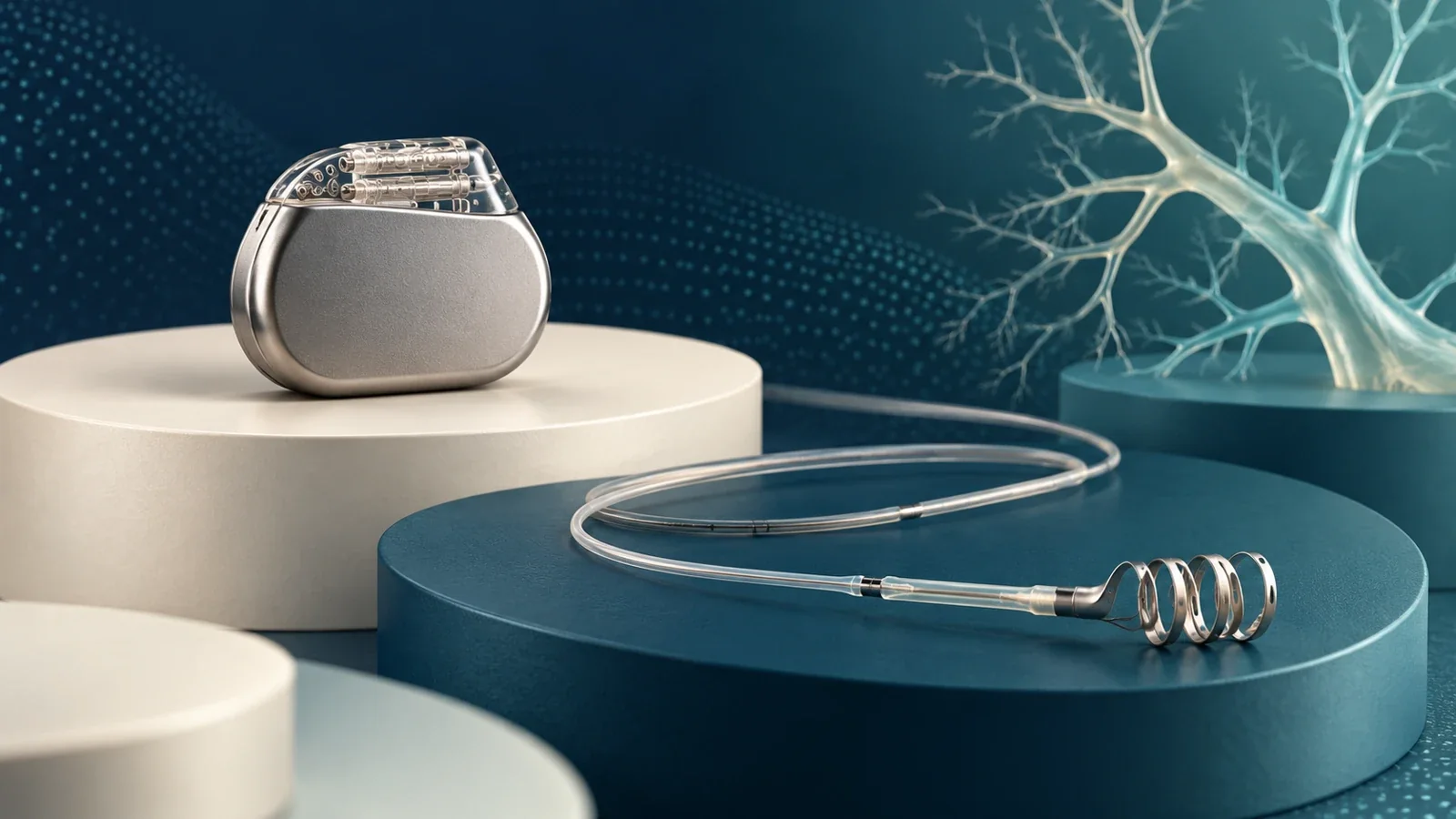
What is vagus nerve stimulation?
Vagus nerve stimulation delivers regular impulses to reduce seizure burden in selected patients. VNS connects a subcutaneous chest generator to an electrode around the neck's vagus nerve. Standard systems do not place electrodes directly in brain tissue, but implantation is surgery requiring suitable facilities.[1]
The vagus participates in brain–organ communication. VNS aims to influence seizure activity through these networks, rather than remove the disease cause. Frequency, severity and recovery are distinct goals; equal change is not expected in everyone.
Is it the same as a brain implant?
No. It differs from DBS, brain-surface stimulation and skin stimulators in target, surgery and programming. Research on one device cannot transfer directly to another.
When might it be considered?
Some people with drug-resistant epilepsy unsuitable for removal of an onset region may discuss VNS. Review trials, type and prior assessment. NICE considers it an addition to medicines when resection is unsuitable, not a device requirement for all patients.[2]
Age, seizure type, conditions and previous responses matter. Children need paediatric expertise. Caregiver observations, records and participation plans matter where learning or communication is difficult.
Can VNS be selected without surgical assessment?
The epilepsy team should review all options. Fear of brain surgery alone does not automatically select VNS. A resectable focus has separate benefits and risks. Assessment may recommend another method or medicine monitoring.[3]
Benefit and evidence limits
VNS treatment may reduce frequency or severity in some, with limited or no meaningful response in others. Complete seizure freedom is not expected for everyone. Evaluate over time rather than only the first postoperative days.[1]
Studies and guidance cover different ages, syndromes, settings and durations. Benefit in one group does not establish identical results in another. Some long-term questions remain uncertain and should be discussed.[4]
Establishing a seizure diary at baseline is useful for this reason. Record falls, injuries, rescue medication requirements and recovery time as well as the number of seizures. Goals should arise from the difficulties experienced in the person's daily life. Implanting a device does not mean every epilepsy-related risk has disappeared. At subsequent visits, these records help discuss the burden of seizures and any change in function alongside the technical operation of the system.
What is assessed before surgery?
Report rhythm problems, breathing symptoms, sleep apnoea, swallowing and voice problems alongside diagnosis and drug history. Discuss neck or chest operations, implants and all medicines. Doctors plan blood thinners; do not stop them independently.[5]
Anaesthesia and tests are individual. Follow written fasting, admission and medicine guidance. Day-of-surgery preparation does not replace later monitoring arrangements. Plan support, transport and contact routes beforehand.
Are medicines stopped before surgery?
Antiseizure medicines must not be stopped outside medical instructions. Surgical and anaesthetic teams coordinate how treatment will continue around the operation. Tell the team if a dose has been missed or another product needs to be used. Preparation instructions from another patient cannot simply be adapted to the person's own circumstances.
Implantation and initial settings
A standard system has a neck electrode and chest generator connected beneath the skin. Explain access and device features. General knowledge helps, but online technical details do not replace individual planning.[3]
The generator is activated and stimulation increased according to the follow-up centre's plan. Programming may require more than one session. Seizures and adverse effects are considered together when settings are adjusted. The patient or caregiver is taught how to use the system and, where relevant, a special magnet. Magnet use depends on the exact device model and the team's instructions; general internet recommendations should not replace that training. Understanding this ongoing process is part of preparing for treatment.
Battery status is monitored. Settings and model affect duration, so lifespan is not universal. Future replacement or hardware procedures may be needed. Discuss these initially to explain long-term burden.
Possible adverse effects and surgical risks
Voice change, throat discomfort, cough or breathing symptoms during stimulation may occur. Adjustment may help some effects, but every complaint is not simply adaptation. Swallowing and respiratory issues need assessment. Report sleep-related breathing history.[5]
Infection, bleeding, wounds and complications near nerves are possible. Hardware problems may need intervention. Magnitude depends on individual features and earlier care. Specialists may need to switch off or remove a system.
Can MRI and other procedures be performed?
MRI suitability must be verified for the exact generator and electrode system, the body region to be examined and the specified conditions. Show the implant card to the imaging team. Procedures such as diathermy may create serious interactions, so the device must be disclosed before other healthcare interventions. Model-specific manufacturer safety documents and the follow-up centre's guidance determine appropriate arrangements. Device information should remain accessible when receiving care elsewhere.
Follow-up, wound care and seizure diaries
Individual discharge advice covers wounds and activity. Report increasing redness, discharge, fever or swelling. New significant breathing difficulty needs emergency assessment rather than waiting for a device visit.[6]
VNS supplements rather than replaces medicines in suitable patients. Neurology manages prescriptions even after improvement. Diaries help programming. Caregivers can record changed patterns and stimulation symptoms. Assess function and burden alongside device operation.
Questions before deciding
Questions about the seizure type being targeted, why other surgical options were considered unsuitable and when and how response will be assessed make discussion concrete. Ask how programming support would be arranged if follow-up must continue elsewhere. Living with a device extends beyond the day of the operation.
Choosing not to proceed, or asking for more time to decide, also belongs in the consultation. The decision requires understanding potential benefit alongside surgical risk and the burden of follow-up. If uncertainty remains about the diagnosis, clarifying it comes before discussion of device selection. The name of a stimulation method cannot replace that assessment.[4]
Preparing for life with a device
A practical plan includes keeping device identity information, review dates and emergency contacts. Family members who help during seizures may benefit from attending device training. Support needs at school or work are assessed individually. Seizure safety precautions continue after implantation; swimming, working at height and driving require personal assessment. When attending a new healthcare service, report the implant alongside all medicines. These preparations help treatment continue consistently and understandably within daily life, rather than limiting attention to whether the generator has been placed.[6]
VNS assessment in İzmir
Bring EEG, MRI, medicines and diaries to consultation. Neurosurgical assessment may include specialist epilepsy referral. Op. Dr. Ozan Ganiüsmen can discuss information and options. Candidacy, implantation and long-term programming require joint epilepsy team assessment.
Scientific and Institutional Sources
- AANS — Vagus Nerve Stimulation
System, intended effects, adjunctive medicines and variable outcomes
- NICE — NG217 Epilepsies: recommendation 8.3.1
Adjunctive VNS assessment when resective surgery is unsuitable
- NHS England — Vagal nerve stimulation for epilepsy
Specialist assessment and context; English funding criteria not presented as Turkish authorisation
- NICE — Evidence review 14: Vagus nerve stimulation
Clinical data and limits of long-term evidence
- Essex Partnership University NHS — VNS patient information
Preparation, voice and breathing symptoms and device safety
- Cambridge University Hospitals — VNS therapy: patient discharge information
Wound care, activation and continuing medicines