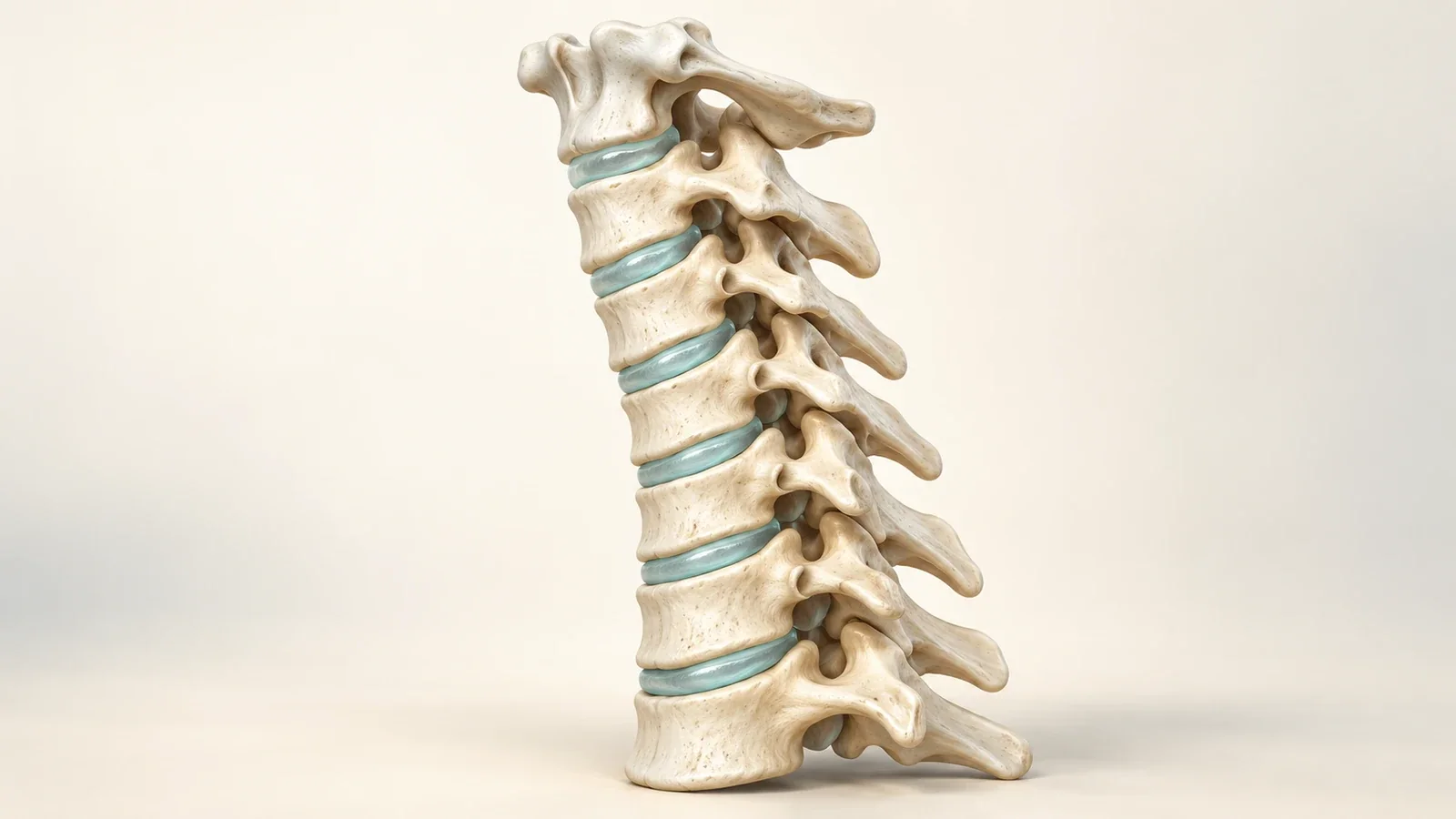
What is a cervical disc herniation?
A cervical disc herniation occurs when disc tissue in the neck moves beyond its normal boundaries. Depending on its location, the change may affect a nerve root or the space around the spinal cord. Pain radiating from the neck into the arm, numbness and reduced strength can occur with nerve root involvement. Spinal cord involvement may cause symptoms affecting broader functions such as hand dexterity and walking.
Not everyone with neck pain has a cervical disc herniation. Muscles, joints, structures around the shoulder and other conditions can cause similar symptoms. A disc change on imaging does not establish the source of pain on its own. Diagnostic assessment considers the history, neurological examination and any necessary investigations together. Wording in a report should not be interpreted independently of the person's clinical condition.
How are cervical disc herniation and spinal stenosis related?
Cervical spinal stenosis is narrowing of the canal in the neck through which the spinal cord passes. Discs, bony spurs and changes in ligamentous tissues can contribute. Although disc herniation and stenosis may occur together, the terms are not interchangeable. Which structure is affected and how this is reflected in examination findings matter when considering treatment.
What do radiculopathy and myelopathy mean?
Radiculopathy describes clinical findings related to nerve root involvement. Myelopathy means impaired function associated with spinal cord involvement. Arm pain or numbness is not assessed in the same way as reduced hand dexterity and unsteadiness when walking. Even when these terms appear in a report, their diagnostic significance is clarified through examination.[1]
What symptoms can occur?
Neck, shoulder and arm symptoms
Pain may be felt in the neck, between the shoulder blades or in the arm. In some people, numbness or tingling in particular parts of the hand is more prominent. Certain head movements may change the symptoms. However, the location of pain alone cannot determine the position or size of a herniated disc. Shoulder conditions and nerve compression at the wrist or elbow may also need consideration.
Changes in function
Difficulty fastening buttons, dropping objects, changes in handwriting or unsteadiness while walking are also important. These signs have other possible causes and are not specific to a cervical disc herniation. Their onset, rate of progression and relationship to other findings are explored carefully. Changes in daily function can provide information beyond a description of pain severity.
When should you seek prompt assessment?
Sudden or rapidly progressive arm or leg weakness, a new marked walking difficulty and serious neurological changes may require emergency assessment. Neck pain after trauma, neck symptoms with fever or a pronounced deterioration in general health are also important. Seek medical attention rather than waiting for these symptoms to settle on their own.
More gradually developing changes, such as increasing difficulty using the hands or loss of balance, should also be reported promptly. A symptom being present for a long time does not make it unimportant. Equally, not every episode of neck pain requires emergency surgery. The nature of the symptoms and neurological findings determine the priority of assessment.[2]
What does diagnostic assessment involve?
Examination can include arm and leg muscle strength, sensation, reflexes, hand use and, when necessary, walking. Previous injuries, treatments, working conditions and changes at night or with particular movements are discussed. Medicines and other health conditions can also affect the assessment. The history and examination findings are interpreted together.
The roles of MRI, CT and EMG
MRI provides information about discs, the spinal cord and nerve roots. CT may be used to examine certain bony details. EMG can help distinguish nerve root involvement from peripheral nerve problems. Not every patient needs every investigation. Obtaining more images is not sufficient without identifying the clinical question that a test should answer.
Levels and descriptions of compression in an MRI report are compared with the side of symptoms and examination findings. Older and newer images may be reviewed together when appropriate. The same report wording can have different clinical significance in different people; a report alone should not be treated as a surgical decision or a personal prediction of recovery.
How are non-surgical options planned?
Medication, activity adjustments and physiotherapy may be considered for some patients without spinal cord involvement or progressive neurological loss. Aims can include managing pain, maintaining movement and supporting daily function. Medicines and exercises are selected individually. Applying another person's prescribed treatment in exactly the same way is inappropriate.
Taking breaks during work, reducing prolonged fixed positions and maintaining tolerated movements are topics that may be discussed. A particular pillow, device or neck collar is not essential for everyone. If a collar is advised, its purpose and duration of use should be explained. A new neurological symptom during a forceful movement or intervention requires assessment.
When is surgery for a cervical disc herniation considered?
Persistent nerve-related pain, impaired function despite appropriate non-surgical options, progressive muscle weakness and spinal cord involvement are circumstances considered in surgical assessment. Their importance and timing differ between patients. Surgery is not decided on imaging alone or simply because pain is present; the overall clinical picture is considered.
Selecting the approach and its aims
Removing a disc, reducing pressure on nerves or the spinal cord and, where needed, providing spinal stability may form part of the plan. Anterior and posterior approaches, fusion and disc replacement in selected patients are different procedures. Suitability depends on the affected levels, spinal structure and individual health.
A randomised study by Engquist and colleagues compared surgery plus physiotherapy with physiotherapy alone in selected patients with cervical radiculopathy. Its findings relate to that patient group and approach. They should not be applied directly to everyone with spinal cord involvement or every type of neck pain.[3]
A clinical guideline for degenerative cervical myelopathy discusses the importance of severity and progression in decision-making. Mild disease, progressive symptoms and more pronounced functional impairment are not considered the same category. Guidelines do not replace individual examination; they provide one basis for clinical decisions.[4]
Possible risks and follow-up
Depending on the approach, risks discussed include infection, bleeding, nerve or spinal cord injury, persistent symptoms, cerebrospinal fluid leakage and the need for additional procedures. Swallowing or voice problems are also considered for some operations through the front of the neck. The relevance of each risk should be explained in relation to the planned operation.
Movement, driving and return-to-work plans are adjusted to the procedure and recovery. Hand dexterity, strength, sensation and walking matter during follow-up as well as pain. New neurological changes, fever or wound problems should be reported to the healthcare team without waiting for the scheduled review.
Frequently asked questions
Does neck pain alone establish a disc herniation diagnosis?
No. Different conditions can cause similar pain. Assessment involves examination and investigations when needed. A person cannot establish a definite diagnosis or choose treatment solely from a description of the pain.
Can a cervical disc problem be confused with peripheral nerve compression?
Arm numbness and reduced strength may occur with nerve root involvement in the neck or with peripheral nerve problems. The distribution of symptoms, examination and investigations such as EMG, when required, are therefore considered together.
What information should I bring to the consultation?
For assessment at Op. Dr. Ozan Ganiüsmen’s practice in Izmir, prepare previous images, reports and a medication list. If hand use or walking has changed, noting when this began may help the consultation. The practice address is on the contact page.
Which changes should be reported at follow-up?
Changes in hand use and walking can be noted alongside pain. Examples include newly developing difficulty fastening buttons or handling small objects, symptoms affecting both sides, or a change in balance. These observations do not prove a particular condition on their own; they help guide clinical assessment.
Knowing which daily circumstances worsen symptoms can help review the activity plan. However, there is no need to try forceful neck movements to provoke pain. Examination techniques are performed by a healthcare professional under appropriate conditions. Follow-up should include an explanation of when the previous plan might change and where to seek help for new symptoms. Example programmes online or another person's postoperative experience do not replace individual advice.
Scientific and Institutional Sources
- AANS — Cervical Spine
Professional association patient information on symptoms and diagnosis
- NHS — Cervical spondylosis
Institutional patient information on warning signs and assessment
- Engquist et al. — A 5- to 8-year randomized study on the treatment of cervical radiculopathy
Randomised clinical research in selected patients with radiculopathy
- Fehlings et al. — A Clinical Practice Guideline for the Management of Patients With Degenerative Cervical Myelopathy
Clinical guideline on assessment based on myelopathy severity and progression