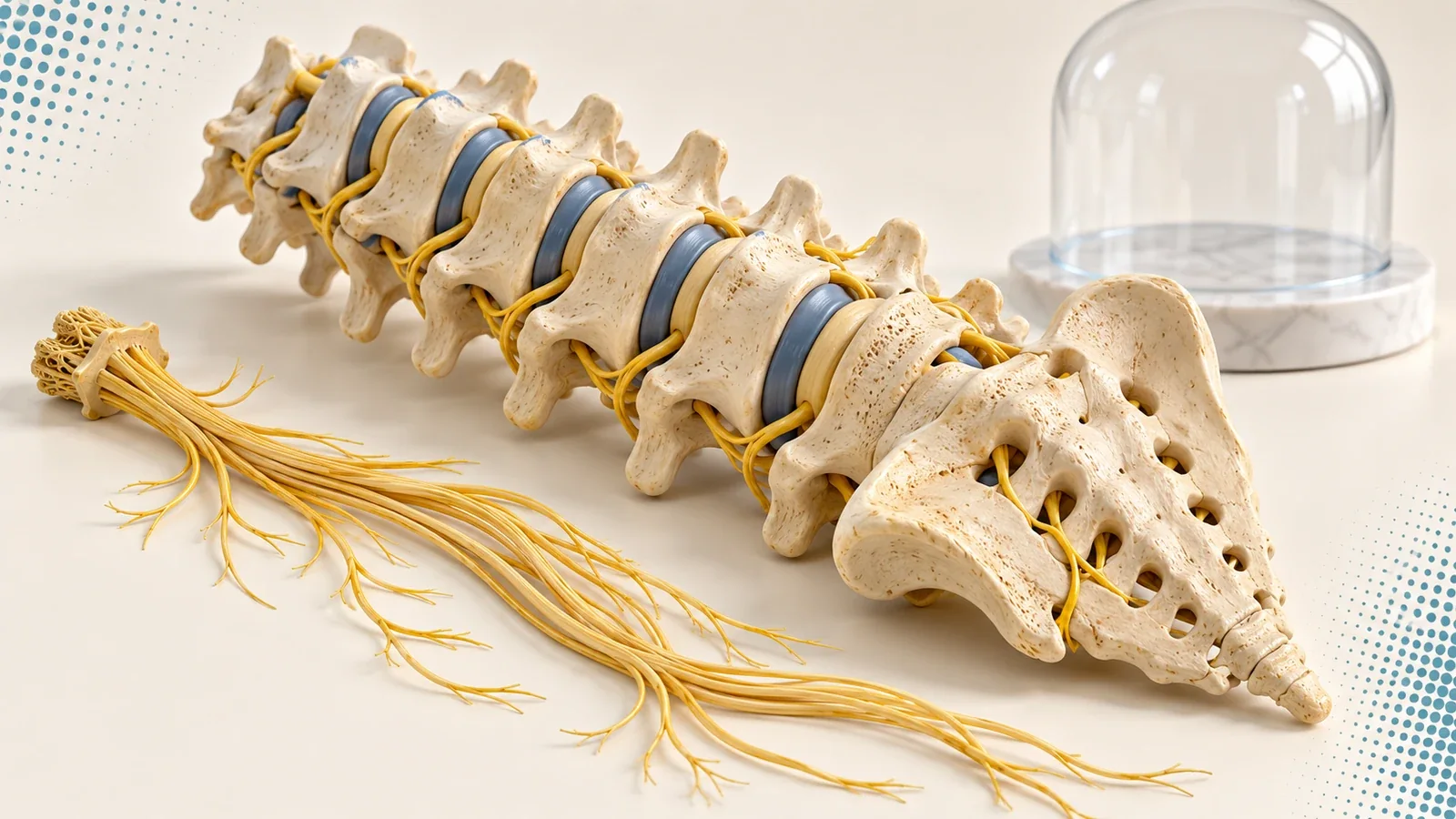
What is tethered spinal cord release?
Tethered cord syndrome describes abnormal attachment to surrounding tissue that may produce stretch-related neurological problems. Release aims to address that attachment in suitable patients. An MRI finding about cord position and a clinical syndrome are different things. Symptoms, examination and images must be assessed together.[1]
Congenital structural differences, fatty lesions or scarring from earlier operations may contribute. Assessment may occur in childhood or adulthood. Identical symptoms, operations and expectations do not apply across ages. Defining the underlying structure is central to planning.
Which symptoms matter?
Movement, sensation and bladder function
Leg strength changes, walking difficulty, altered sensation, back or leg pain and changing foot shape may warrant assessment. Bladder and bowel problems can coexist. Families may notice changed walking or loss of acquired abilities during growth. Other diseases may also cause these findings.[2]
Record onset and course rather than diagnosing from a list. Sudden weakness, inability to pass urine or marked control loss may need emergency assessment. Worsening longstanding symptoms may require earlier review. Describe functional changes as well as pain.
How are diagnosis and surgical assessment performed?
Examination covers leg strength, sensation, reflexes and walking. MRI assesses cord and surrounding structures. Urinary symptoms may need urology and functional testing. Earlier images help assess progression. One test cannot explain the entire decision.[1]
For someone who has already undergone spina bifida repair or another spinal operation, reviewing old records is important. Scar tissue in the operative area and earlier neurological function may affect interpretation of new findings. Adults should also be assessed for more common causes of lower back and leg pain. Finding another explanation may show that not every visible change is responsible for symptoms. Existing and new information are therefore considered together rather than using the report alone.
When might surgery be considered?
Symptomatic disease versus imaging findings
Cord release surgery weighs symptoms and progression against operative risk. Progressive neurological or bladder dysfunction may matter. Imaging alone does not automatically require surgery. Preventive benefits and harms need separate discussion in asymptomatic or minimally symptomatic patients.[3]
Reviews identify uncertainty, particularly about preventive surgery. Few studies and differing populations prevent one universal recommendation. Consider age, anatomy, course and reliable monitoring. Fear of future problems alone should not determine the decision.[4]
Aims and limits of expected benefit
Preventing further neurological deterioration is an important aim. Pain or some functions may improve, but longstanding weakness, sensory or bladder problems may not resolve fully. Damage duration and severity matter. Stability itself may be a meaningful goal.[5]
Discuss each function expected to change or be preserved. Pain relief and bladder change are different measures. Evidence strength differs by outcome. A positive group average is not an individual guarantee.[3]
Monitoring and supportive care
Selected patients may have regular examination, functional monitoring and imaging. Pain management, physiotherapy, walking support and bladder care are individualised. They do not release the attachment but may support everyday life and preservation. Clarify team responsibilities.[1]
When monitoring is chosen, criteria for reassessment should be established. Walking changes noticed by the patient or family, new falls, changes in foot shape and differences in urinary control can be recorded. The frequency of reviews is not determined by one internet recommendation. Non-surgical management is an active follow-up process that may lead to renewed surgical assessment when clinical findings change. The person's observations help describe changes without replacing medical examination.
What should be prepared?
Bring operative reports, MRI, urology assessments and medicines. Report urinary infection or skin wounds. Baseline movement and bladder records aid comparison. Children's assessment combines observations and age-appropriate examination.[2]
Anaesthetic preparation, other diseases and medication management are planned individually. If another operation is needed in a previously treated region, that should be addressed separately during the risk discussion. Patients or families can ask which anatomical problem the procedure targets and which functional expectations may be limited. Preparation instructions should come from the institution performing the operation, rather than from another patient's experience. The aim and the practical arrangements should both be understood before proceeding.
General principles of release
The surgeon assesses the attachment holding cord or related nerves and aims for suitable release. Scope depends on cause. Intraoperative neurophysiology may monitor function without eliminating complications. Details vary with anatomy.[5][7]
Closing the surrounding membranes and protecting cerebrospinal fluid are important components of the procedure. Adhesions from earlier surgery may make tissue separation harder, so the conditions of a first operation and a repeat operation may differ. An internet animation or a photograph of an incision cannot adequately explain the extent of the individual's procedure. This is why surgical details and expectations should be discussed using the person's own anatomy and previous records.
Risks and retethering
Tethered cord surgery may cause infection, bleeding, fluid leakage or wound problems. New weakness, sensory, bladder or bowel changes belong in consent. Retethering may require later reassessment. Risk relates to anatomy and previous procedures.[5]
Evidence for repeat benefit may be more limited. Investigate whether new symptoms reflect recurrence, scar or another cause. More pain does not automatically require reoperation. A remote operation does not justify ignoring new deficits either.[6]
Function and follow-up afterwards
Early checks cover wounds, legs, sensation and urination. Mobilisation, stay and exercise depend on extent. Bed rest and work return are not universal. Medicine reduction and bladder changes require team coordination.[5]
Long-term monitoring matters during growth and with prior dysfunction. Rehabilitation focuses on preserved or developing abilities. Report fever, discharge, weakness or urinary change. Pain relief alone may not justify ending follow-up.
Why monitor bladder and movement together?
A reduction in leg pain does not establish that bladder function has changed to the same extent. Urological assessment and everyday observations may provide different information, so follow-up responsibility should not be based on a single symptom. Families can describe age-appropriate toileting and movement changes in children; adults can explain changes at work or in walking distance. These records are not used to diagnose independently. Comparing each finding with its previous state helps distinguish when a new problem began. Long-term care may require coordination between several specialties.[2][5]
Tethered cord assessment in İzmir
For tethered cord syndrome assessment in İzmir, bring old and new MRI, previous operative reports and a timeline of functional changes. Op. Dr. Ozan Ganiüsmen's neurosurgical consultation may involve paediatric neurosurgery, urology and rehabilitation where needed. Surgical suitability and follow-up cannot be determined from a report alone or from the experience of a similar patient. The purpose is to consider the personal findings together.
Scientific and Institutional Sources
- AANS — Tethered Spinal Cord Syndrome
Definition, clinical assessment and follow-up
- Leeds Teaching Hospitals NHS — What is Tethered Spinal Cord Syndrome?
Congenital and acquired causes; assessment of children and families
- AHRQ — Diagnosis and Treatment of Tethered Spinal Cord: Introduction
Risk-benefit decisions and uncertainty in symptomatic and asymptomatic patients
- AHRQ — Diagnosis and Treatment of Tethered Spinal Cord: Executive Summary
Limited preventive surgery evidence; no strong routine recommendation
- The Walton Centre NHS — Tethered spinal cord syndrome
Operative aims, complications, retethering and individual care
- AHRQ — Diagnosis and Treatment of Tethered Spinal Cord: Discussion
Limits of repeat surgery evidence and decisions alongside natural history
- Great Ormond Street Hospital NHS — Neurophysiology monitoring during surgery
General role of intraoperative nerve monitoring; no claim of absence of complications