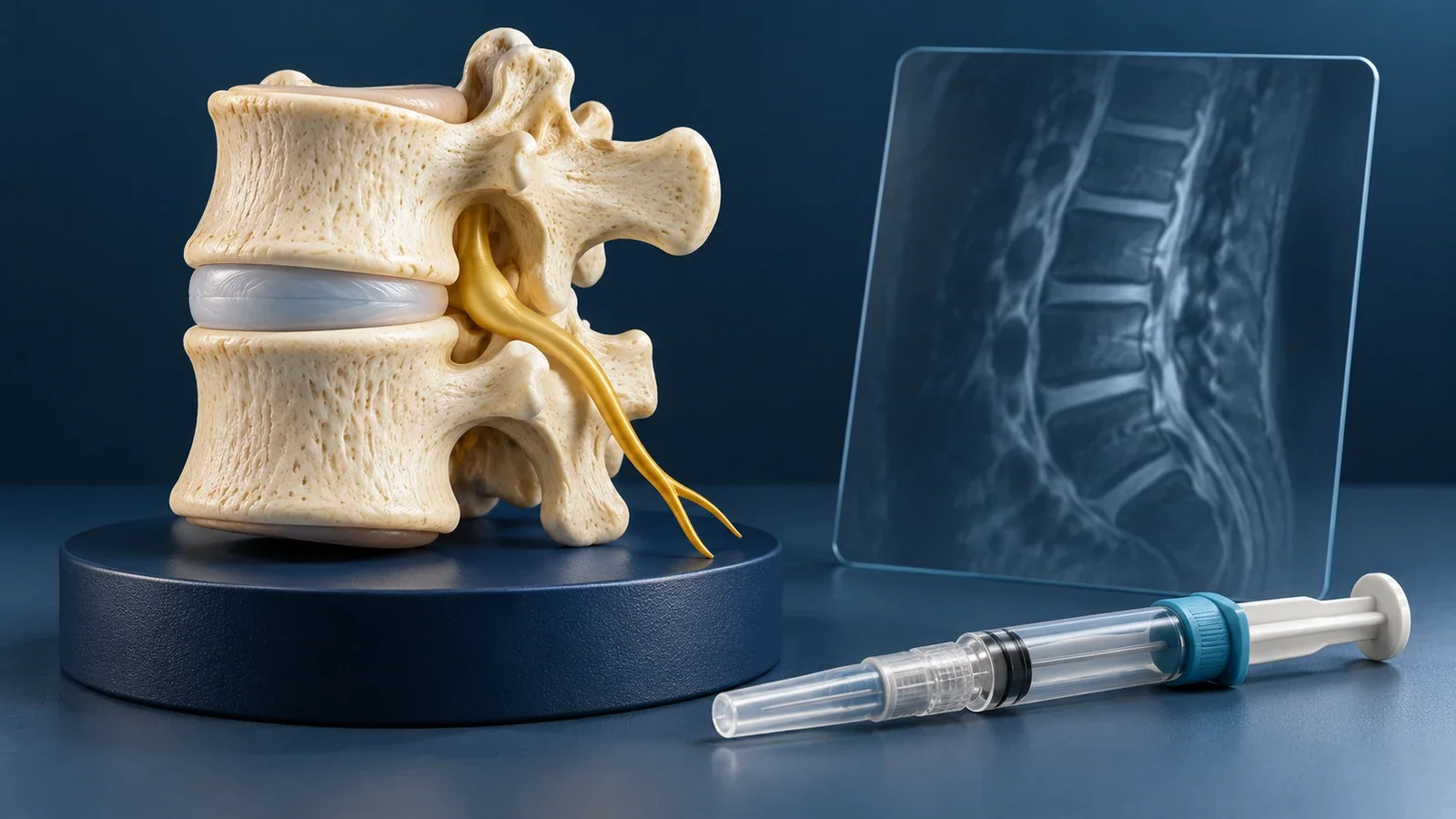
What is a selective nerve root block?
A selective nerve root block injects around a particular nerve root leaving the spine. Depending on circumstances, it may help assess the pain source or attempt to reduce symptoms associated with inflammation around a nerve. Diagnostic and therapeutic procedures differ in contents and interpretation. The doctor should explain the question being investigated beforehand.[1]
Nerve block, root injection and transforaminal epidural injection are sometimes used interchangeably. Target area and medicine distribution nevertheless matter. The procedure name alone does not provide a sufficiently detailed explanation. Examination and imaging together assess which nerve may relate to pain radiating into a leg or arm. Not every imaged herniation needs injection.
Which symptoms might prompt consideration?
Assessing nerve root pain
Irritation around a root may cause pain and sensory symptoms following its distribution. Pain spread, reflexes, strength and sensation help assessment. Disc changes at several levels can complicate identification of the symptomatic level. In selected circumstances, response to targeted injection is considered alongside other findings, rather than as a definitive diagnostic test.[2]
Aiming for temporary relief
Therapeutic use aims to contribute to pain reduction in a suitable patient. It neither removes a herniation nor eliminates bony narrowing. Pain changes may facilitate exercise and daily participation, without any advance guarantee. No benefit, partial relief or temporary change are possible. In advanced neurological loss, injection should not delay necessary surgical assessment.[3]
How is a diagnostic response interpreted?
Less pain after a nerve root block may suggest that the target contributes to symptoms. Spread to adjacent structures, multiple pain sources and daily variation may affect the result. Knowing which pain changed and for how long is more meaningful than simply saying it helped. Expected recording methods can be explained beforehand.[2]
A positive response should not automatically determine surgery. Non-response likewise does not alone prove the root contributes nothing. History, neurological examination and imaging are interpreted together. Medicines and any sedation used also matter. Targeted injection should not be regarded as an independent solution explaining every aspect of an unclear clinical picture.
Alternatives and decision-making
Options for radicular symptoms vary individually. Information, suitable activity, rehabilitation and medication benefit-risk assessment may form part of non-surgical care. Considering injection does not make these unnecessary, nor must everyone try every method sequentially. Duration, functional loss and other diseases influence planning. Surgery is discussed where needed.[4][6]
NICE considers epidural local anaesthetic and steroid for acute severe sciatica, while not recommending routine spinal injections for lower back pain alone. This highlights the distinction between root pain and other causes. Patients should understand the rationale, targeted mechanism and outcome to be monitored.[4]
Assessment before the procedure
Medicines and accompanying conditions
Tell the team about blood thinners, diabetes medicines, allergies, previous contrast agents and recent infections. Pregnancy or its possibility matters for imaging. Patients should not independently decide to stop or continue medicines affecting clotting. Adjustments are arranged by the procedural team and prescribing doctor. Previous procedural complications should also be shared.[1]
When attending the consultation, bring the actual images themselves where possible, together with reports from earlier imaging investigations. Reviewing both can contribute to the assessment. Cervical and lumbar procedures do not have identical risk assessments. The doctor explains which spinal level is being targeted, the proposed approach and whether that application is suitable in the person's own circumstances. Ask the centre about fasting, accompaniment, driving and time off work. Written questions can help prevent important details being missed during consent.
The general stages of the procedure
The intervention uses suitable sterile conditions and monitoring facilities. Imaging may help identify the target. After skin preparation and local anaesthesia, the planned injection is given. Medicine selection depends on region and patient characteristics. This text does not describe professional details such as needle angles or doses.[2]
Report unexpected pain, dizziness or unusual sensations during the procedure. Observation may be needed because temporary sensory or strength changes can occur. Discharge depends on symptoms, examination and general condition. Obtain written guidance on home monitoring and contact routes. Site care and return to activity follow individual recommendations.[3]
Risks and scientific limitations
Possible unwanted effects include injection-site pain, temporary symptom increases, bleeding, infection, allergy and headache. Medicines may temporarily cause numbness or weakness. Steroid-related blood glucose and other systemic effects need consideration. Serious nerve, spinal cord or vascular complications are possible. Region-specific risks, particularly in the neck, require detailed discussion.[1][3]
Research differs in procedure, region, medicines and selection. Short-term benefits in epidural steroid studies do not establish the same effects for every selective diagnostic block. Individual long-term benefit and repeat needs are difficult to predict. An ineffective procedure should prompt reassessment rather than automatic repetition. Numbers and intervals should not depend solely on a standard package.[5]
Why must imaging agree with symptoms?
Several spinal levels may show changes without all matching the pain distribution. Report wording is compared with history and examination. The word herniation does not justify intervention at that level. Conversely, clinical importance is not determined solely by the size of a small-looking change. Investigation dates and subsequent symptom changes therefore matter.[2]
Targeting one root does not exclude surrounding tissues from assessment. Joints, muscles and other structures may contribute simultaneously. Distinguishing which pain changes is important. Describe the specific radiating arm or leg symptom rather than only feeling generally better or worse. Records may be clearer than later recollection.
An unexpected response prompts review of diagnosis or target. The result of a single injection does not mean that every other possible treatment option has been ruled out or that further assessment cannot continue. Surgery, rehabilitation and other pain approaches remain under consideration. Personal goals, work needs and daily limitations belong in planning. Changing clinical findings determine whether further investigation is needed.
Monitoring outcomes and common questions
Does relief mean treatment is complete?
Pain reduction does not show that all underlying structural changes have resolved. Gradual activity adjustment and necessary rehabilitation continue. A diary can include walking distance, sleep, sitting tolerance and daily participation. Review can then address function as well as pain presence. New or different symptoms should be distinguished from the original pain.
When should you seek reassessment?
Fever, increasing redness, worsening pain, persistent or progressive weakness and bladder–bowel control changes require medical assessment. People seeking advice on a selective nerve root block in İzmir should share medicines and previous procedural effects. Neurosurgical assessment aims to identify the cause and full range of suitable options rather than decide only on an injection.
Scientific and Institutional Sources
- University Hospitals of Leicester — Having a nerve root block injection for pain
Institutional patient information; root block aims, serious cervical risks, medicines and procedure
- Royal National Orthopaedic Hospital — CT guided facet joint injections / nerve root blocks / nerve root injections
Institutional patient information; imaging, root injections, preparation and risks
- Royal Wolverhampton NHS — Nerve Root Block Injection
Institutional patient information; possible absence of benefit, complications and follow-up; numerical rates not reproduced
- NICE NG59 — Low back pain and sciatica in over 16s: assessment and management
Clinical guideline; radicular pain, limits on routine injections and distinctions between medial branch blocks and radiofrequency
- AAN — Epidural Steroids for Cervical and Lumbar Radicular Pain and Spinal Stenosis: Systematic Review Summary (2025)
Systematic review; short-term radiculopathy benefit and long-term uncertainty, not generalised to all injection types
- NHS — Slipped disc
Institutional patient information; lumbar disc herniation, alternatives and symptoms requiring urgent assessment