What is microdiscectomy?
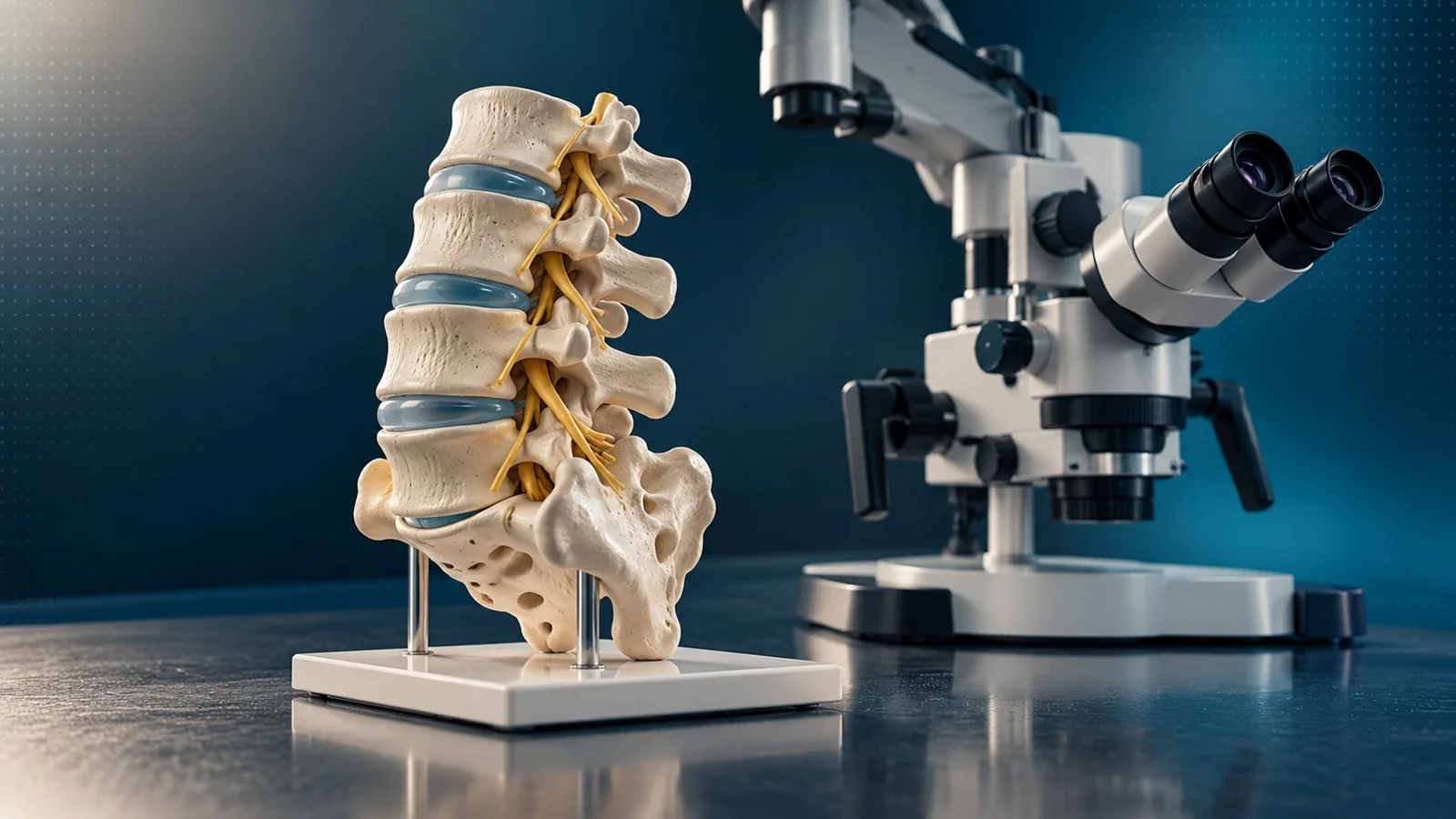
Microdiscectomy aims to surgically remove a fragment protruding from a lumbar disc and pressing on a nerve root. An operating microscope helps magnify structures within the small surgical field. The aim is not to replace the whole disc or eliminate every cause of lower back pain. Establishing how symptoms relate to nerve compression determines the procedure's purpose. Two people with the same MRI wording may have different treatment needs.[1]
Discs lie between vertebrae and contribute to load transfer and movement. Part of a disc may extend beyond its usual boundary. This imaging finding alone does not justify surgery. Radiating leg pain, numbness, strength and reflex findings are assessed to see whether they identify the same nerve root as the image. Work, mobility and the course of symptoms also form part of discussion.
When is surgery considered?
Agreement between symptoms and imaging
Surgery may be considered when nerve root symptoms persist despite non-surgical approaches and substantially affect life. Pain severity or an adjective in an MRI report alone is insufficient. The doctor considers pain distribution, examination changes and the compression site together. Explaining benefit from previous medicines or rehabilitation also helps individualise the decision.[2]
Symptoms that may require emergency assessment
New inability to pass urine, impaired bladder or bowel control, altered sensation around the genitals or progressive substantial weakness should not wait for a routine appointment. Emergency healthcare assessment is needed instead of choosing a method from an online article. Assessment determines whether surgery is required and its timing. No fixed waiting period applies to all patients.[3]
What are the alternatives to microdiscectomy?
Lumbar disc herniation treatment is not limited to surgery. Suitable patients may consider monitoring, activity adjustment, medicines appropriate to their health and exercise-based rehabilitation. Interventional pain procedures may be assessed separately for selected nerve root pain. These options are not equivalent: aims, benefits and risks differ. It matters not only what was tried before, but whether it targeted the relevant problem.[3]
Endoscopic disc surgery is another surgical approach. Selection between endoscopic and microscopic techniques relates to herniation location and characteristics, accompanying stenosis, previous operations and surgical assessment. A smaller incision does not make a method suitable for everyone. Fusion or screw systems are not compulsory parts of microdiscectomy; they require a separate rationale for another structural problem.[4]
What is assessed before surgery?
Bringing actual previous MRI images, reports and surgical records facilitates comparison. The doctor asks about symptom onset and changes. Concrete examples of difficulty walking, climbing stairs, sitting or standing help describe functional limits. The duration of previous weakness and whether it is worsening should be specified. The consultation covers more than the operation's technique.
All medicines, including blood thinners, supplements, allergies, diabetes and previous anaesthetic problems should be shared. Medicines should not be stopped independently. Preoperative and anaesthetic investigations are tailored to health. Follow the institution's written instructions for arrival, fasting, an accompanying adult and assistance after discharge. Another patient's online preparation list does not replace individual instructions.[1]
The general aim and scope of surgery
Surgical access is obtained at the relevant level to remove the disc fragment compressing nerve tissue. The extent of any limited bone or ligament work needed for visibility varies individually. This description is not an operative manual. The target level and side, and whether the procedure addresses only a fragment or additional compression, should be discussed beforehand.[1]
Microsurgical lumbar disc surgery does not promise to restore the disc's original biological structure. Even after decompression, longstanding numbness or weakness may follow a variable course. Leg pain and central mechanical back pain may have different causes. The expected symptom target should therefore be clear, without assuming every complaint will improve at the same speed. Discussing meaningful functional goals makes expectations easier to understand.
Possible risks and limitations
Risks considered include bleeding, infection, nerve tissue injury, cerebrospinal fluid leakage and anaesthetic problems. Persistent symptoms, new symptoms or later additional treatment are also possible. Risk does not depend only on the operation's name. Previous surgery, other conditions, tissue characteristics and procedure extent matter in individual assessment. Another patient's experience does not establish personal risk.[1]
Remaining disc tissue may herniate again. Recurrent pain does not always have the same cause and may require examination. Reherniation, healing tissue at the surgical site and problems at another level must be distinguished. A history of surgery alone cannot establish the need for another operation. Potential benefit, revision risks and non-surgical options are discussed together. Follow-up findings may change the initial plan.
How is postoperative follow-up planned?
Early advice covers wound care, safe movement and pain control. Progression of walking, sitting arrangements and lifting limits depend on the individual plan. Desk work and heavy physical work have different return requirements. Driving, sport and sexual activity can also be discussed at review. One universal number of days overlooks operative scope and personal circumstances.
New or increasing weakness, altered bladder control, fever, wound discharge or rapidly worsening pain should prompt immediate contact with the team. Follow-up considers movement, sleep and daily function as well as pain scores. Rehabilitation needs depend on preoperative status and recovery. Exercise timing and content should be individualised; standard social media exercise lists should not be adopted directly.
Understanding and recording the decision
Writing a brief summary after the consultation can help check understanding. It can include the spinal level, intended goal, alternatives and review timing. A patient may ask a relative to attend. Their presence does not replace the patient's own preferences. Asking for unfamiliar terms to be explained more simply is appropriate.
Work and home circumstances should also be shared. Someone living alone may need particular discharge support, while a physical worker may need specific loading limits. A treatment decision involves preparation and follow-up, rather than just technical procedure selection. A written record of baseline symptoms makes it easier to identify new changes later.
What questions can you ask?
Which symptom is surgery expected to affect?
This question clarifies the target. Expectations for radiating leg pain, numbness and back pain can be discussed separately. Asking why an alternative was not preferred is also part of decision-making. If monitoring without surgery is chosen, learn which findings require reassessment. An informed decision requires understanding uncertainties alongside positive aspects.
How can you prepare for microdiscectomy assessment in İzmir?
People seeking brain, spinal cord and nerve surgery assessment in İzmir can prepare a symptom timeline and previous treatment records for their consultation with Op. Dr. Ozan Ganiüsmen. The aim is to clarify the cause of symptoms and the personal relevance of options, rather than choose an operation in advance. Microdiscectomy is one method that must be assessed alongside clinical findings.
Scientific and Institutional Sources
- UCLH — Multi level lumbar microdiscectomy
Procedural aims, preparation and risks; institutional success percentages not reproduced.
- AANS — Herniated Disc
Examination, neurological findings and surgical decisions.
- NHS — Slipped disc
Non-surgical approaches and emergency symptoms.
- AANS — Minimally Invasive Spine Surgery
Distinguishing surgical techniques and indications.