What is endoscopic lumbar disc surgery?
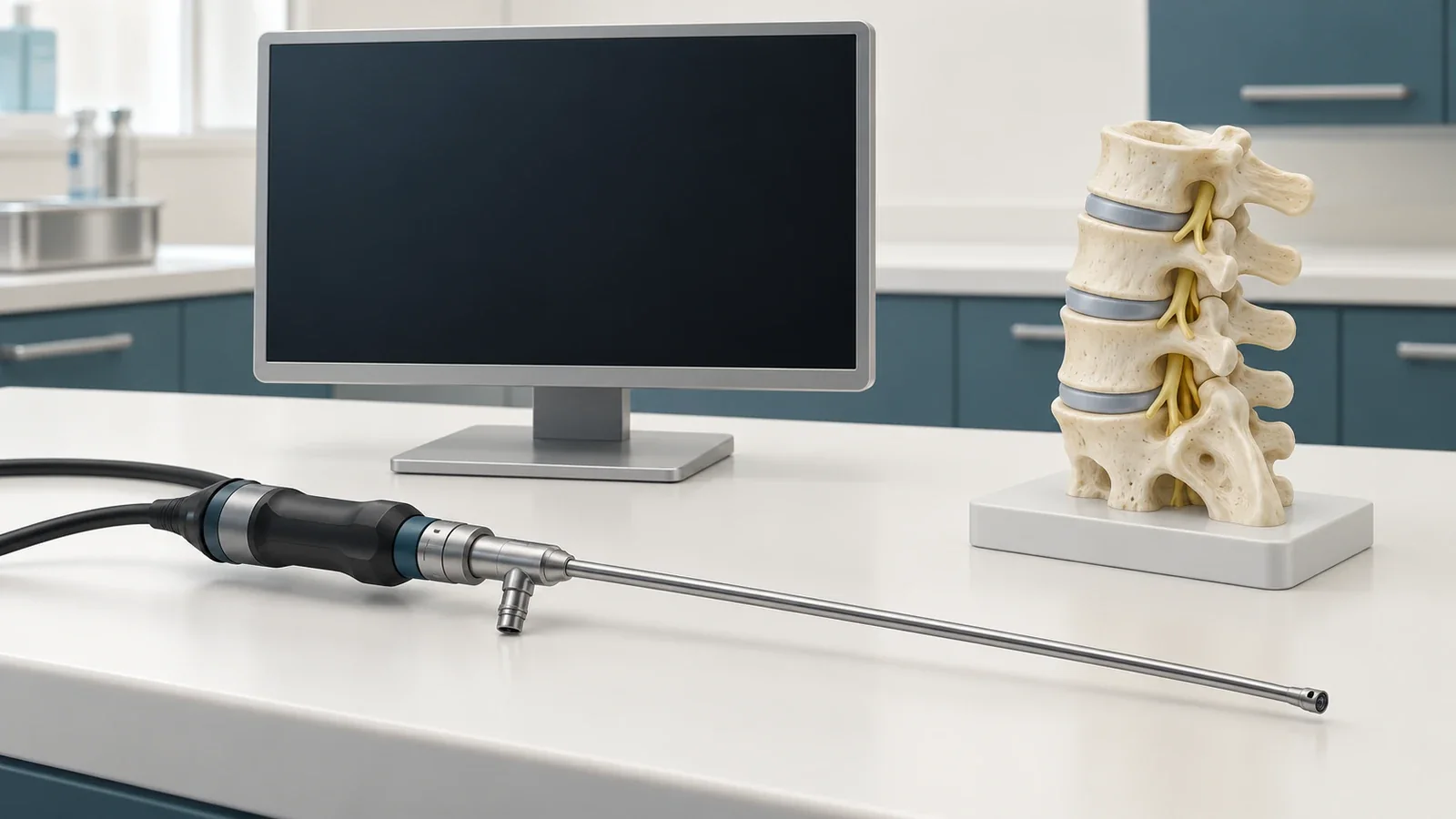
Endoscopic lumbar disc surgery is one surgical approach for reaching disc tissue affecting a nerve root in suitable patients. An endoscope is an optical system that transmits images to a screen. Instruments are used through a working space appropriate to the approach. The main aim is to reduce nerve compression identified as relevant to the person's symptoms. The procedure's name does not mean every type of lower back pain can be treated this way.
The everyday term keyhole surgery does not describe a single technique. Endoscopic procedures and operations under a microscope have technical differences, but both are surgical interventions. A limited incision does not remove the need to consider bleeding, infection or nerve injury. Decisions depend on the condition rather than the procedure's name.[1]
For whom might it be considered?
Surgical assessment for lumbar disc herniation generally depends on the relationship between nerve-related leg symptoms, examination and imaging. Persistent functional loss, substantial pain or neurological findings despite non-surgical options may inform the decision. Technique suitability cannot be separated from whether surgery is needed at all. An intervention is not recommended solely because a technique appears feasible when surgery is unnecessary.
Why does the herniation's location matter?
The disc fragment's position, its relationship to the nerve root and the access permitted by bony anatomy are assessed. Previous operations, spinal stenosis and other problems involving spinal movement may also influence selection. Two people with a herniation at the same level may differ in their suitability for endoscopy. Choosing a method from the herniation size in an MRI report alone is insufficient.
No single age limit or standard symptom duration applies to every candidate for endoscopic lumbar disc surgery. General health, symptom progression and alternatives are considered together. Another person's operation at a different centre does not establish that the same approach suits everyone with similar pain.
How is preoperative assessment performed?
The consultation covers radiation of pain into the leg, numbness, strength changes and previous treatments. Neurological findings are compared with MRI changes. Additional investigations may be arranged when needed; an identical set is not compulsory for every patient. Previous operation documents and imaging dates may help explain the current situation.
Medicines and health information
All medicines, including blood thinners, allergies, heart and lung conditions, diabetes and previous anaesthetic experiences should be reported. The team decides whether a medicine needs changing. Stopping medication independently to prepare for surgery is inappropriate. Fasting and requirements for an accompanying adult are clarified through individual written instructions.
Transforaminal and interlaminar approaches
A transforaminal approach uses a surgical route related to the nerve exit region of the spine. An interlaminar approach uses access between bony structures at the back of the spine. These definitions do not explain every operative detail or personal risk. The route is chosen after assessing the herniation's position and anatomical conditions.
Changing the working area or switching to another technique during surgery may be necessary. This possibility can be discussed beforehand. A changed plan does not always mean an unexpected error; operative conditions may require different decisions for safe access and adequate assessment. Patients should understand the planned method's limits.
How does it compare with microdiscectomy?
Microdiscectomy and endoscopic discectomy are different approaches used in selected lumbar disc herniation patients. Imaging systems and access methods differ. The technique's name alone does not determine individual outcomes. Herniation characteristics, coexisting conditions, surgical planning and follow-up should inform comparison.
A randomised trial published in the BMJ compared percutaneous transforaminal endoscopic discectomy with open microdiscectomy in selected people operated on for sciatica caused by lumbar disc herniation. Its design assessed non-inferiority of the endoscopic approach against defined criteria. Results cannot be transferred uniformly to every herniation type or all endoscopic techniques.[2]
A positive study finding on one measure does not justify superiority claims for all patients. Short-term pain changes, repeat intervention and long-term function are different outcomes. The consultation can explain which outcome is targeted and how it relates to the person's everyday life.
What are the method's limits?
A herniation may not be the only cause of lower back pain. Symptoms from muscles, joints or other structures may persist after an operation on disc tissue. When several problems coexist, the symptom targeted by surgery should be discussed in detail. The duration and severity of previous nerve involvement may also influence recovery expectations.
Using an endoscope does not mean every spinal change is addressed simultaneously. Extensive stenosis, instability or other structural problems may require another plan. Surgical scope follows clinical need rather than a wish to perform a larger procedure. An unexplained technical preference does not provide sufficient information for an individual decision.
How are possible complications discussed?
Possible issues include infection, bleeding, nerve root injury, cerebrospinal fluid leakage, insufficient fragment removal, persistent symptoms and recurrent herniation. Additional intervention may sometimes be needed. Risks should be explained in relation to the procedure's details and personal health. A general percentage should not be used as an individual outcome prediction.
New weakness, bladder or bowel control changes, fever or a significant wound problem after surgery should be reported promptly. Sudden, severe neurological symptoms require emergency assessment. Rather than assuming a symptom is a normal surgical effect and waiting, patients should follow their own instructions for seeking care.[3]
Postoperative follow-up and movement
Hospital stay, starting to walk and return to work are planned individually. A small incision or endoscope does not mean everyone resumes the same activity on the same day. Physical job demands, medicines and neurological status are considered. Driving advice should also be individualised.
Follow-up examines leg strength, sensation and daily function as well as pain. Rehabilitation and exercise recommendations reflect examination findings. Starting an online programme independently after surgery may be inappropriate. Noting when particular symptoms began can help assessment.
What can you ask before deciding?
Which symptom does the operation target?
The discussion should specify whether the aim concerns back pain, leg pain, weakness or restricted walking. Patient priorities may not always match the change the procedure can provide. Important everyday functions and the limits within which an outcome should be assessed therefore belong in the consultation.
What are the other options?
Monitoring, non-surgical approaches and other operations can be compared for suitability. You can discuss when waiting is possible, which symptoms change timing and whether another opinion is needed. Information should help explain options rather than direct people towards one method's name.
Additional points to clarify
Do numbness and pain follow the same course?
Even when pain and numbness relate to the same nerve problem, they may change at different rates. Each persistent symptom should therefore be described separately. New muscle weakness and continuing pre-existing sensory symptoms are assessed differently. Patients can ask which findings their monitoring plan covers.
Previous surgical records can be brought to the consultation. A different herniation, recurrence and other postoperative causes may be described using similar words but require distinction. Whether a technique can be repeated depends on new examination and imaging assessment.
Expected aims, anaesthetic options and discharge conditions should be explained before surgery. Not every endoscopic operation uses the same anaesthetic plan. Other diseases and operative scope may influence this choice. Preparation questions can be discussed with the team before the procedure day.
Assessment for endoscopic lumbar disc surgery in İzmir
Assessment for lumbar disc herniation treatment in İzmir considers previous images, treatments and current neurological findings together. Op. Dr. Ozan Ganiüsmen's practice details are on the contact page. This article provides general information; the need for surgery and suitability of an endoscopic approach can only be determined through individual assessment.
Scientific and Institutional Sources
- AANS — Minimally Invasive Spine Surgery
Professional society patient information; general scope of endoscopic and microscopic approaches
- Full endoscopic versus open discectomy for sciatica: randomised controlled non-inferiority trial
BMJ randomised trial; selected sciatica patients and comparison of PTED with microdiscectomy
- NHS — Lumbar decompression surgery
Institutional patient information; surgical scope, risks and monitoring