What is decompressive craniectomy?
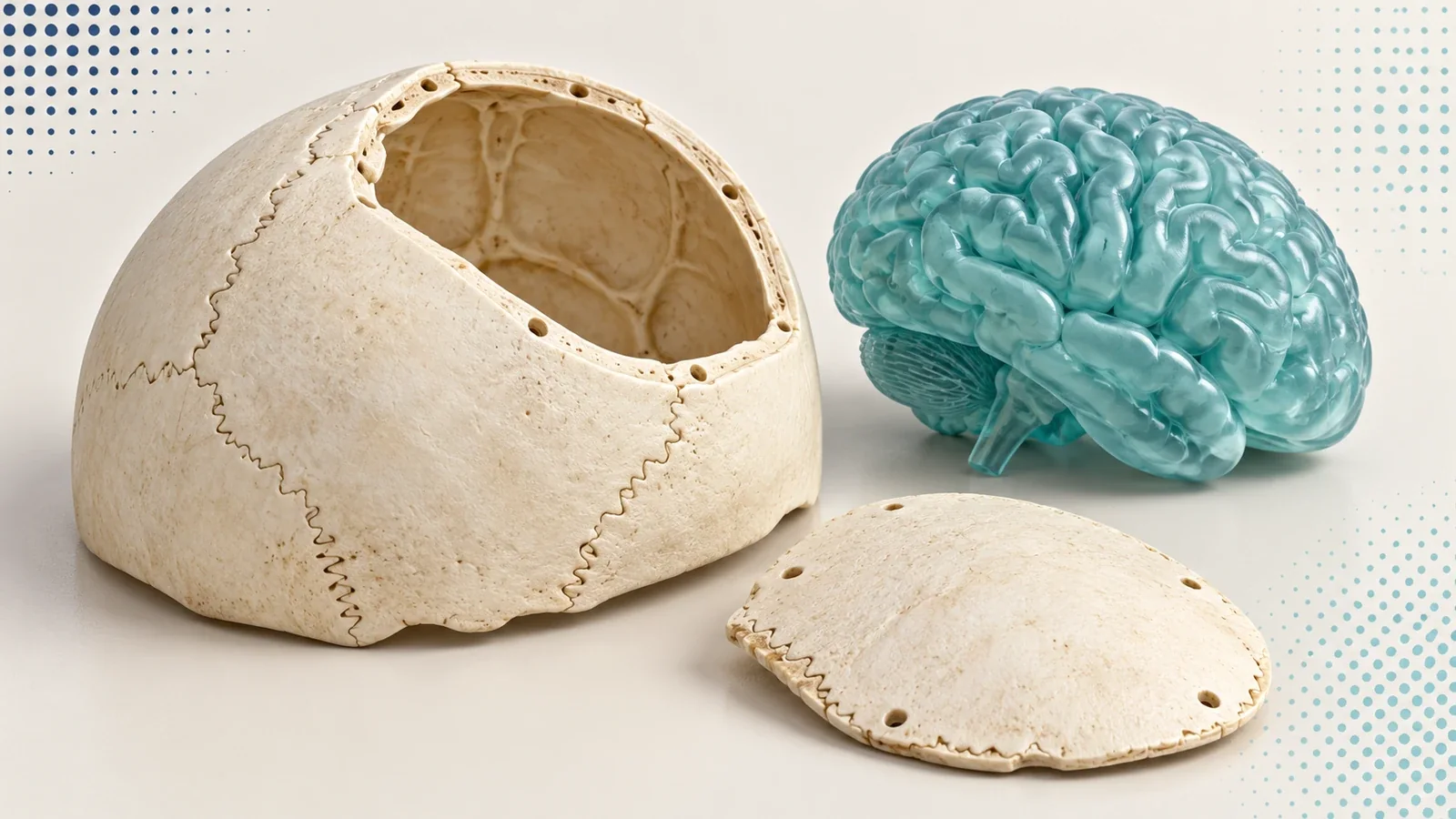
Decompressive craniectomy removes a skull section to provide space for swollen brain in selected circumstances. Bone is not immediately replaced. It aims to help reduce pressure in the enclosed skull, rather than directly repair existing tissue damage. Life-threatening pressure and long-term neurological recovery are different outcomes.[1]
Craniotomy usually replaces the flap at completion; craniectomy leaves a defect for possible later cranioplasty. Understanding this distinction helps relatives understand ongoing care.
When might it be considered?
Pressure after traumatic brain injury
Severe trauma can cause swelling and raised pressure persisting despite intensive care. Specialists may consider surgery. Alternatively, swelling during acute clot evacuation may prompt leaving bone out. These are different decision points.[1][2]
Other severe swelling, including certain large strokes, may also prompt decompression. Trauma trial findings cannot directly transfer to other diseases. Assess underlying cause and condition-specific evidence. This page mainly concerns traumatic pressure management.
What informs assessment?
Consciousness, pupils, CT, other injuries and response are considered together. Pressure monitoring may help selected patients. A single image or a single pressure measurement may not explain the whole clinical picture, so findings are interpreted together with the other available information. Systemic problems affecting oxygenation are treated simultaneously.[3]
The person's function before the injury, general health and known preferences are important. Emergency circumstances can restrict detailed conversation, but the aim of care, possible need for life support and uncertainty about outcomes should be explained as far as possible. A success story heard by the family cannot determine the severity of their relative's injury or their future independence. Expectations may need to be updated as further clinical information becomes available.
How is evidence interpreted?
Updated Brain Trauma Foundation guidance distinguishes early and late refractory pressure conditions. It supports secondary craniectomy in certain late circumstances without assuming the same benefit early. Relatives should not classify these merely by hours since injury; specialists must interpret study conditions.[1]
Lower intracranial pressure and daily independence differ. Guidance notes uncertain relationships between pressure and long-term function in some circumstances. Survival discussion should include severe disability possibilities. Group figures should not become personal predictions outside studied populations.[1][3]
How does it relate to other care?
Intensive care continues
Decompression does not replace respiratory, circulatory, temperature and metabolic management, imaging and neurological observation. Medicines or cerebrospinal fluid drainage may suit selected cases. Sequence depends on the clinical picture.[3]
Not every trauma requires craniectomy. Bone replacement during evacuation may suit some. RESCUE-ASDH compared selected patients without making either approach compulsory for all. Safe replacement feasibility during surgery is another determinant.[2]
How is the operation explained?
The opening reflects pressure distribution and anatomy. Expansion of the covering may also be planned. Scope relates to safe decompression. A small online incision or named technique cannot establish adequacy.[1]
Storage of the removed bone or later use of a different material depends on the centre and clinical need. When and how the skull will be reconstructed requires a separate assessment from the first operation. Infection, continuing swelling or other health problems may affect that later plan. Relatives should be told where the current defect is and how it should be protected during care.
Risks and outcome limits
Possible complications include bleeding, infection, seizures, cerebrospinal fluid circulation problems and further surgery. Death or lasting neurological loss may remain possible because of the underlying severe injury. It is incorrect to attribute all such risks only to the operation, just as it is incorrect to say the operation removes them. Individual assessment considers the injury and the surgical intervention together.[3]
Research examines survival and function in selected groups. Some need long-term care. Discuss communication, movement, personal care and rehabilitation as well as discharge chances. Update expectations as information emerges.[4]
Care while the skull defect remains
Care after craniectomy includes protecting the skull defect and arranging safe mobilisation. The team decides whether an individually fitted protective helmet is needed and when it should be worn. Rather than independently purchasing standard headgear, appropriate fit and pressure assessment should be ensured. Positioning in bed and transfers follow the care team's instructions. These precautions are related to the person's actual defect and condition, not to a general list intended for every head injury.[5]
Assess wounds, new swelling, fever, consciousness or weakness. Teach pressure avoidance and fall prevention at home. Set gradual rehabilitation goals around capacity. A generic exercise list cannot replace examination.
What can relatives ask?
Relatives can ask what the operation aims to achieve now, which problems remain apart from pressure and what changes the team will monitor over the next few days. The possible need for reconstruction, feeding and communication support, rehabilitation and care after discharge can also be discussed. Not every question has a definite answer on the first day, which makes regular information meetings important.
There is no recovery date that applies to everyone. Moving from intensive care to a ward is a positive stage, but does not establish that functional recovery is complete. Keeping medical records, the discharge summary and the next review plan organised helps communication between different teams. These records also help relatives understand which needs are being assessed at each stage.
Discussing long-term goals
After severe brain injury, one of the hardest issues for families is living with early uncertainty. Changes within the same day may matter, while long-term function cannot always be predicted in the first hours. Team meetings can distinguish what is known, what is still unknown and which information is expected at the next assessment. This helps avoid placing excessive meaning on one laboratory value or imaging phrase. Brief notes from earlier discussions can help relatives organise their questions when the team next provides an update.
Life support and functional goals
Nutrition, possible ways of communicating and mobility are separate areas. One may improve while another continues to need substantial support. Rehabilitation assesses present capacity and sets suitable goals rather than offering the same progress chart to everyone. Research outcome scales also try to combine these different functions. What the findings mean in the daily life of the person and family should be discussed plainly. Relatives can ask for unfamiliar points to be explained again instead of relying only on technical terms.[4]
Neurosurgical follow-up in İzmir
Review original reports, images and medicines for decompressive craniectomy or aftercare advice in İzmir. Consultation with Op. Dr. Ozan Ganiüsmen can clarify team responsibilities and further assessment. New consciousness change, seizures or rapidly developing deficits are emergencies that should not wait.
Scientific and Institutional Sources
- Brain Trauma Foundation — Decompressive Craniectomy Recommendations, 2020 Update
Early versus late refractory pressure in severe trauma; pressure and functional outcomes distinguished
- RESCUE-ASDH — Decompressive Craniectomy versus Craniotomy for Acute Subdural Hematoma
Bone replacement comparison in acute subdural surgery; not generalised to all trauma
- Hawryluk et al. — Guidelines for Severe TBI: 2020 Update of Decompressive Craniectomy Recommendations
Evidence assessment and clinical context of secondary craniectomy
- Hutchinson et al. — Trial of Decompressive Craniectomy for Traumatic Intracranial Hypertension
Randomised RESCUEicp trial; survival and severe disability considered together, without personal rates
- UHCW NHS — Cranioplasty following traumatic brain injury
Protecting the defect and separately assessing later reconstruction