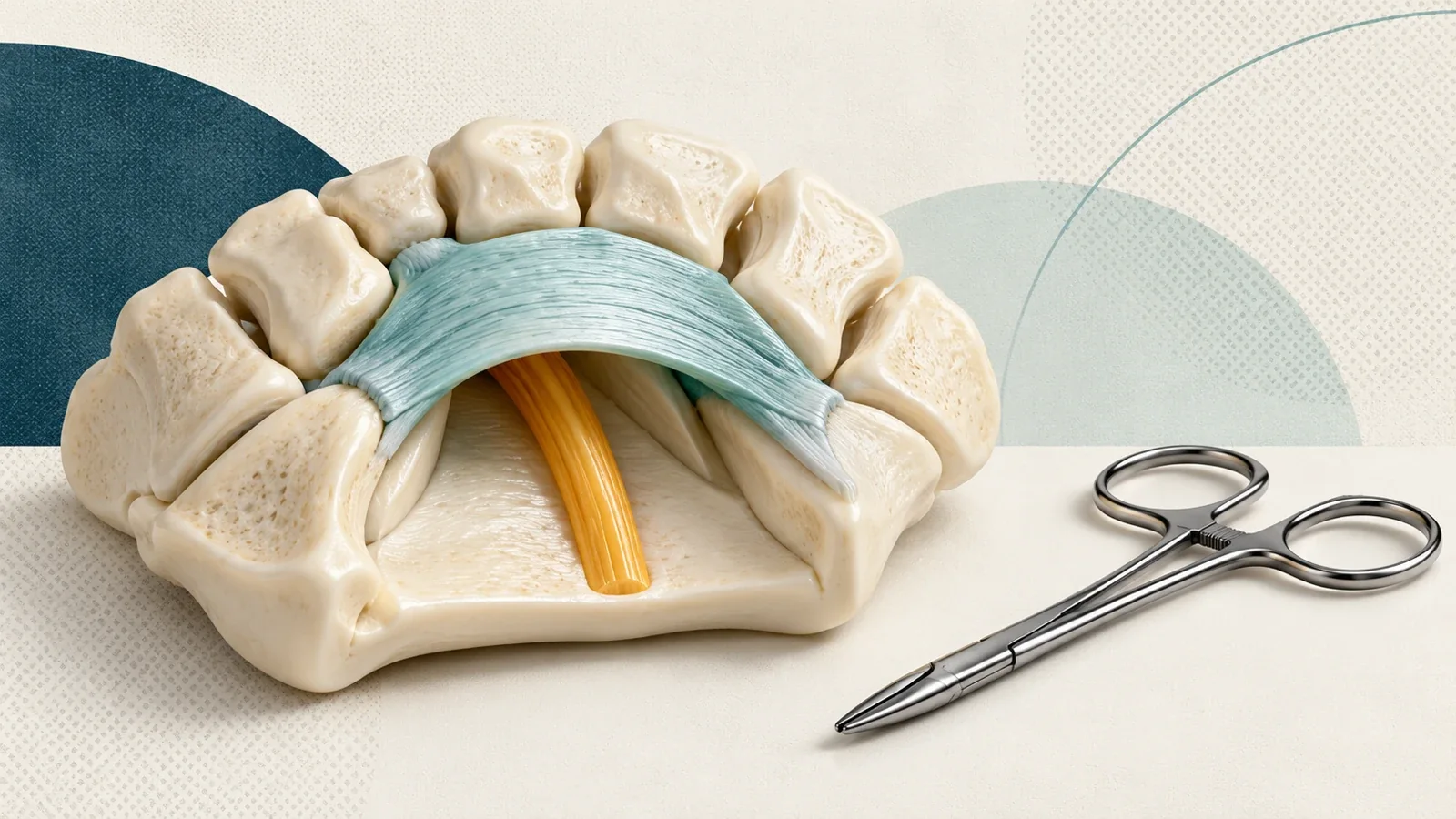
The aim of carpal tunnel release
Carpal tunnel surgery reduces pressure on the median nerve within a narrow wrist passage. This nerve contributes to sensation in the thumb, index, middle and part of the ring finger and supplies some thumb muscles. The problem therefore extends beyond numbness. Buttoning clothes, holding small objects or opening jars may be affected. Release of the ligament forming the tunnel roof aims to give the nerve more space. It should not be understood as instantly restoring every damaged nerve fibre.[1]
Carpal tunnel syndrome can be confused with cervical root problems, and several nerve levels may be affected together. Hand numbness alone therefore does not determine surgery. Distribution, duration, day–night differences, strength and earlier care are considered together. This article discusses confirmed median nerve compression at the wrist rather than claiming every hand pain can be treated identically.
What assessment is performed before surgery?
Examination and nerve conduction studies
Questions cover affected fingers, waking at night and changes after shaking the hand. Thumb-base muscles, grip and fine movement are examined. Neck, elbow or other nerve findings may be investigated. Diabetes, thyroid disease, pregnancy, rheumatological conditions and previous wrist injuries may influence planning without automatically requiring surgery.
Nerve conduction studies and, where necessary, electromyography help assess location and severity. Results are interpreted with history and examination. Ultrasound or other imaging is not compulsory for everyone but may investigate masses, anatomy or uncertainty. Test dates matter; an old result may not explain later weakness. Clinical circumstances determine whether new testing is needed.[2]
When is surgery considered?
Carpal tunnel release may be assessed when symptoms substantially affect daily life, persist despite suitable non-surgical options or suggest progressive nerve dysfunction. Persistent sensory loss, thumb weakness or wasting need careful consideration. Mild symptoms do not always mean mild nerve involvement; night pain may lessen while weakness increases. Pain intensity alone should not determine the decision.
In severe longstanding nerve damage, release may reduce pressure without fully restoring sensation or strength. Potential benefit, preservation of function and residual symptoms are discussed separately. With both hands affected, simultaneous or staged treatment depends on need. The person's working conditions and whether support will be available at home are also part of the practical decisions involved in planning treatment.
What are the non-surgical options?
Splints, everyday habits and injections
Mild or intermittent symptoms may prompt consideration of a night splint holding the wrist appropriately and adjustment of aggravating activities. These do not surgically widen the tunnel; they aim to manage symptoms in some people. Splint type, use and reassessment are individualised. Identical exercises or work arrangements are not appropriate for every computer user. Movement demands, wrist position and other diseases are considered together.[1]
Local steroid injection may suit some patients, but its purpose and lasting effects should not be equated with surgery. Medicines, injections and exercises require individual assessment. Randomised splint-versus-surgery studies inform defined populations without imposing one preference on everyone. Monitoring remains necessary without surgery. New weakness or substantial functional change warrants examination rather than automatic continuation of the old plan.[3]
How is preparation planned?
Report medicines, blood thinners, allergies, previous anaesthesia and other diseases. No medicine should be stopped without advice. Skin wounds, infection or new health issues should be reported before surgery. The institution explains anaesthesia, fasting and arrival. Preparation instructions heard from another patient should not be assumed to apply to this person's own operation, because the procedure and circumstances may differ.
Discuss the hand, aims, alternatives and risks clearly. Plan for protecting dressings, shopping, cooking and transport at home. Heavy manual workers should plan return by actual tasks as well as dates. Signing consent does not replace questions; unclear points should be resolved beforehand.
Open and endoscopic approaches
An open approach reaches the ligament through a palm incision. Endoscopic release uses a camera and specialised tools. Both aim to reduce median nerve pressure. Selection depends on anatomy, previous surgery, surgical assessment and centre circumstances. A smaller incision alone does not mean better nerve recovery; scar appearance should not be the sole criterion.
The aim is not to cut the nerve. Removing surrounding pressure allows biological recovery. Unexpected anatomy or other problems may be found, and circumstances requiring plan changes can be discussed. General online information cannot determine a detailed personal technique. Day-case arrangements also depend on health and institutional practice.
Possible risks and limitations
After median nerve decompression, infection, bleeding, wound problems, scar sensitivity and pain with loading the palm may occur. Nerve or branch injury, new numbness and weakness should be discussed. Less commonly, regional pain problems with prolonged pain and stiffness may develop. Risk assessment must be individual; one centre's rates cannot apply to everyone.[2]
Persistent symptoms do not always mean recurrent compression. Initial nerve damage, another disease or diagnostic uncertainty may contribute. Symptoms may recur later and require investigation. Revision should not be decided without reviewing the first operation and current findings. At the beginning, clarify whether the main expectation is less pain, better sleep at night or prevention of further strength loss, since these are distinct treatment goals.
Recovery, hand use and reviews
Advice about wound care and movement is provided according to the particular surgical technique used. Finger movement, loading, stitch review and hand therapy are not scheduled identically for everyone. Numbness and grip recovery may follow different timelines. Work and driving depend on safe grip, pain, medicines and tasks. Heavy lifting or complete immobilisation without assessment may be inappropriate.[4]
Increasing redness, discharge, fever, unexpected severe pain, new weakness or substantial finger circulation changes should prompt contact. Expected healing findings should be explained at discharge. Recording a few previously difficult tasks helps describe functional change at review. Comparing progress only with another patient's timetable can mislead.
Common questions and assessment in İzmir
Does surgery also relieve numbness originating in the neck?
Wrist surgery does not treat cervical root compression. Correct source identification therefore matters. Coexisting problems may require separate plans. Painkiller response or night numbness alone does not establish the diagnosis.
Will every symptom disappear immediately?
Recovery rates differ between findings. Persistent numbness, advanced wasting or other nerve diseases may leave symptoms. Expectations should be explained individually using examination and investigations.
People seeking carpal tunnel surgery assessment in İzmir should first establish which nerve causes symptoms. Op. Dr. Ozan Ganiüsmen's neurosurgical information pages aim to distinguish conditions from methods. Bring nerve conduction studies, earlier reports and a medicine list to discuss options in relation to individual findings.
Scientific and Institutional Sources
- Royal Orthopaedic Hospital — Carpal Tunnel
Clinical symptoms, surgical aims and limited recovery in advanced nerve damage
- Hull University Teaching Hospitals — Carpal Tunnel Syndrome: Your Diagnosis and Treatment Options
Diagnosis, options and general surgical risks; institutional rates not reproduced
- Gerritsen et al. — Splinting vs surgery in the treatment of carpal tunnel syndrome: a randomized controlled trial
Randomised trial; splinting versus surgery interpreted within the study population
- Cambridge University Hospitals — Hand therapy advice following your carpal tunnel release surgery
Wound care, hand function and individual rehabilitation; no fixed return timetable