What is carpal tunnel syndrome?
Median nerve compression in a narrow passage
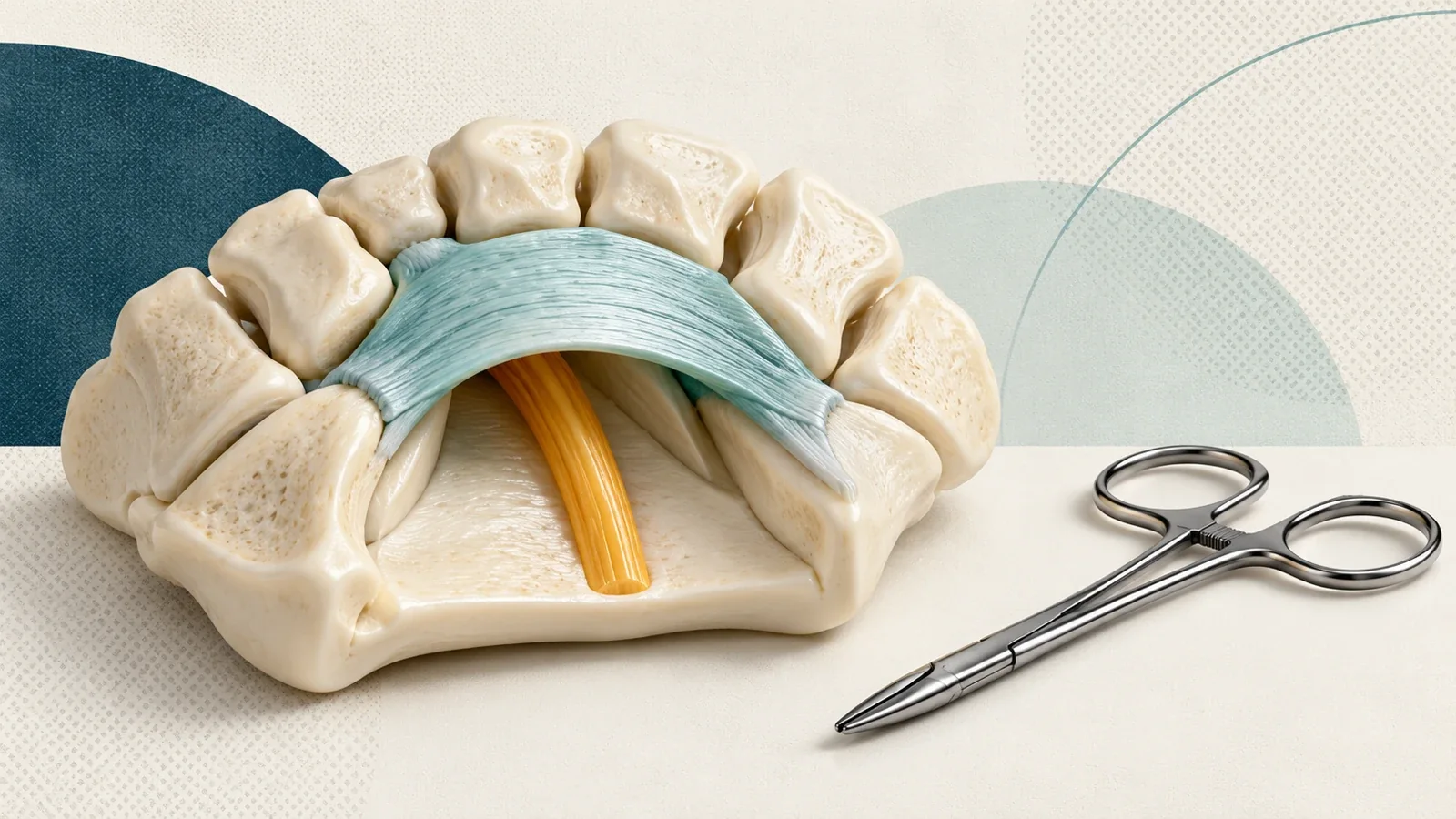
Carpal tunnel syndrome compresses the median nerve within the wrist's bony and ligamentous passage. It supplies sensation in the thumb, index, middle and part of ring finger and some thumb muscles. Increased pressure may cause intermittent tingling followed by more persistent sensory and muscle problems. Both hands may differ in severity.[1]
A single cause is not identified in everyone. Pregnancy, diabetes and hormonal or inflammatory disorders may matter. Work and hobbies can aggravate symptoms, but computer use should not explain every case. Establish whether the problem really comes from the median nerve at the wrist. Cervical root problems, other entrapments and widespread neuropathy may resemble it, and several conditions can coexist. Assessment should distinguish their contributions before choosing a treatment.
How are symptoms distinguished?
Night numbness and thumb function
Waking numbness, shaking the hand and tingling while holding a phone are common. Distribution supports diagnosis. Predominant little-finger symptoms may suggest another nerve, but patients may not describe precise anatomy. Whole-hand pain alone does not exclude it.[1][2]
Advanced involvement may make small objects, buttons or keys difficult. Thumb-base wasting and constant numbness are important. Reduced pain does not necessarily mean improvement when nerve loss is severe. Record which fingers were affected first, duration and disruption of sleep. Sudden coldness, colour change or rapidly increasing severe pain after trauma is not typical chronic carpal tunnel syndrome and requires prompt assessment rather than continuing an old treatment plan.
What do examination and tests show?
Interpret tests alongside symptoms
Assess sensation, thumb strength and other nerves. Position-provoked symptoms or percussion tingling support but do not prove diagnosis. Neck, elbow and general examination help distinguish alternatives. Ask about conditions and medicines.[2]
Nerve conduction studies and, where needed, needle EMG help assess compression site and severity. They can be particularly informative with atypical symptoms, weakness or planned surgery. Ultrasound may add information about nerve structure or another mass; not everyone needs MRI. Tests alone do not order an operation: agreement with clinical findings is sought. Earlier results help assess progression. Conditions such as diabetes causing wider nerve involvement also matter when interpreting results, so the whole health history should be shared.
Who may suit non-operative care?
Reducing symptoms in mild disease
Suitable-position night splints, avoiding aggravating postures and work adjustments may help mild intermittent symptoms. The aim is less strain rather than abandoning every task. Continue care for diabetes or hormonal disease.[1][2]
Selected injections may provide short-term relief, but temporarily reduced symptoms do not establish permanent decompression. A doctor assesses medication or injection risks and individual suitability. Studies comparing splints and surgery involve selected populations; one trial does not apply identically to everyone.[3] Persistent sensory loss or muscle weakness should not be managed only by suppressing symptoms. Agree beforehand how response will be assessed and which findings would prompt a surgical opinion, so monitoring addresses function as well as discomfort.
What does surgery address?
Pressure relief and recovery limits
Carpal tunnel release opens the roof ligament. Approach depends on anatomy and assessment. Significant or persistent involvement, failed suitable care and disability may justify discussion. Not every numb hand needs surgery.[1][2]
Possible risks include bleeding, infection, wound sensitivity, palm pain, nerve or vessel injury and persistent symptoms. Night symptoms and muscle weakness may recover at different speeds. Severe longstanding damage may leave incomplete sensation or strength. Surgery releases pressure but cannot guarantee biological nerve recovery. Consider associated neck disease or widespread neuropathy when interpreting results. Discuss expected benefit and work-return needs individually rather than comparing only the incision or another patient's recovery time.
How is the hand protected afterwards?
Wound and function together
Movement, wounds and loading depend on technique. Therapy and exercises are individual, without forcing through pain. Desk and heavy-grip work differ. Report redness, discharge, fever or new weakness.[4]
Bring previous EMG, splint or injection details and notes on affected fingers to assessment in İzmir. Op. Dr. Ozan Ganiüsmen can discuss agreement with nerve distribution, non-operative options and realistic surgical change. With advanced wasting, pain level alone should not guide decisions. Assess current hand function and the capacity that may be preserved. Everyday difficulties and previous responses provide useful context for understanding why a particular option is being considered. When discussing options, describe activities that bring on numbness and those made difficult by weakness. Bring earlier nerve tests and details of splints or injections. This information helps relate symptoms to examination findings and agree how changes in sensation, strength and daily function will be followed over time. Discuss any remaining questions during the consultation.
Scientific and Institutional Sources
- Royal Orthopaedic Hospital — Carpal Tunnel
Clinical symptoms, surgical aims and limited recovery in advanced nerve damage
- Hull University Teaching Hospitals — Carpal Tunnel Syndrome: Your Diagnosis and Treatment Options
Diagnosis, options and general surgical risks; institutional rates not reproduced
- Gerritsen et al. — Splinting vs surgery in the treatment of carpal tunnel syndrome: a randomized controlled trial
Randomised trial; splinting versus surgery interpreted within the study population
- Cambridge University Hospitals — Hand therapy advice following your carpal tunnel release surgery
Wound care, hand function and individual rehabilitation; no fixed return timetable