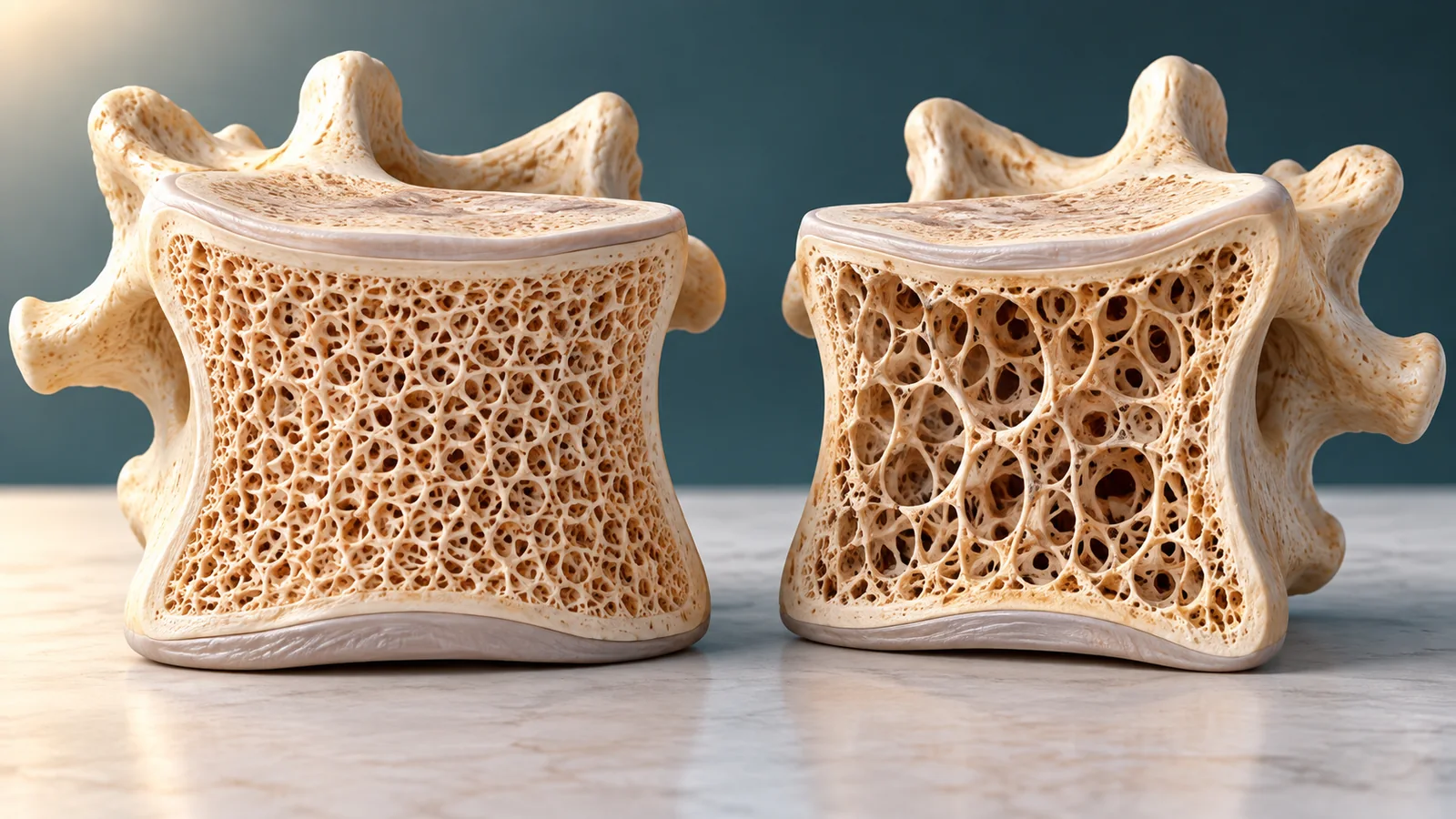
How does osteoporosis affect bones?
More than a change in mineral content
Osteoporosis is associated with reduced bone strength and an increased risk of fractures. In the spine, an important consequence is a vertebral compression fracture after a minor fall or even everyday loading. Explaining the disease solely as a mineral imbalance is insufficient: changes in bone density and internal structure both matter. The effects should be considered alongside the person's overall fracture risk.[1]
Osteoporosis may remain silent for years and first become apparent after a fracture. Not all back pain is osteoporosis, and low density alone does not explain the source of pain. Older age, menopause, some illnesses and prolonged use of certain medicines contribute to assessment. Men can also be affected. After a fracture, treating pain alone is insufficient; bone health needs separate attention to help prevent further fractures.[6]
How might a vertebral fracture become apparent?
Sudden pain or gradual height loss
New upper or lower back pain after minor trauma, or without clear trauma, can suggest a vertebral fracture, particularly in an older person. Standing, turning or loading may aggravate pain. Other fractures are less obvious: reduced height or increasing curvature may be noticed. Repeated fractures can affect posture and everyday movement. Different fractures do not necessarily cause symptoms of the same severity.[1]
New pain needs to be distinguished from muscle strain, infection, tumours and other causes. Report previous cancer, fever, unexplained weight loss or increasing night pain. New leg weakness, reduced sensation around the groin or altered bladder control require urgent neurological assessment. Reduced movement from pain can affect independence and fall risk, so a safe movement plan is needed. A fixed period of bed rest is not suitable for everyone.
How are diagnosis and fracture risk assessed?
DEXA and fracture imaging answer different questions
Bone density measurement using DEXA is an important part of bone health assessment. Results are interpreted with age, previous fractures and other risk factors. Fracture risk assessment can inform treatment, but a single density value does not define the whole clinical risk. Selected patients need blood tests and relevant specialist assessment for secondary causes of osteoporosis. The findings are considered together rather than in isolation.[2][3]
For acute spinal pain, radiographs, MRI and CT answer different questions. MRI may indicate whether a fracture is recent and help identify other causes; CT shows bone detail. Not everyone needs every test. DEXA is not designed to locate an acute fracture or show nerve compression. Earlier images help distinguish new and old fractures. Kidney disease, other medicines and a history of falls are recorded before treatment.
What does non-operative treatment include?
Treating a fracture and preventing the next one
Fracture pain may be managed through individually suitable pain relief, short-term supports where needed and safe movement. Prolonged complete bed rest can cause muscle loss and other problems, so advice reflects general health and fracture characteristics. Physiotherapy, posture and balance work may be considered at an appropriate stage. Guidance on avoiding sudden or excessive loading is personalised rather than applied as the same restriction to everyone.[1][5]
Bone health treatment aims to reduce future fracture risk. Nutrition, assessment of calcium and vitamin D needs, fall prevention and, where appropriate, osteoporosis medicines form part of this plan. Selection considers kidney function, other illnesses, fractures and ability to follow treatment. Stopping some medicines also needs planning, so they should not be discontinued independently.[2] Reviewing home lighting, slippery floors and vision problems provides practical opportunities to reduce falls.
Does every fracture need cement augmentation?
Vertebroplasty and kyphoplasty are selective procedures
Vertebroplasty and kyphoplasty involve placing bone cement in a vertebral body for selected painful fractures. Kyphoplasty may create a cavity with a balloon beforehand. Neither treats osteoporosis itself. Selection considers severe pain from a recent, unhealed fracture despite appropriate pain management, with examination and imaging linking the pain to that fracture. An image showing vertebral collapse does not by itself establish suitability for a procedure.[4]
Older fractures, another pain source or unsuitable anatomy may limit expected benefit. Risks include cement leakage, nerve compression, migration through blood vessels, infection and bleeding. Anaesthesia and procedural planning vary individually. Immediate pain-free walking or freedom from future surgery cannot be promised.[5] Fractures with nerve compression or significant instability may require consideration of other surgical options. Decisions need clinical findings and the actual images assessed together.
Why is long-term follow-up important?
A first fracture brings future risk into focus
Reviews cover pain, movement, new falls and signs of further fractures. Medicine suitability, tolerance and necessary blood tests are assessed. Repeating density measurements follows the individual treatment plan; frequent short-interval testing is not automatically useful. Significant new back pain should be investigated again rather than attributed to an old fracture. Family support, safe movement and practical home adaptations can help maintain independence in the person's real living circumstances.[2][3]
Bring DEXA results, previous spinal images and a medicine list to an osteoporosis and spinal fracture consultation in İzmir. Op. Dr. Ozan Ganiüsmen can assess effects on nerves and spinal stability, with relevant specialists involved in bone health care. Discussion of an intervention should explain whether pain is genuinely related to the fracture and whether suitable non-operative options have been sufficient, alongside the potential benefits and risks.
Scientific and Institutional Sources
- NHS — Osteoporosis
Bone fragility, silent progression and a general framework for fractures
- NHS — Osteoporosis: Treatment
Medicine selection by fracture risk and treatment monitoring; no doses provided
- NHS — Bone density scan (DEXA scan)
Bone density measurement interpreted alongside fracture risk
- NICE TA279 — Recommendations
Vertebroplasty and kyphoplasty selection: recent unhealed painful fracture and persistent pain despite appropriate management
- Royal Orthopaedic Hospital — Vertebroplasty
Fracture treatment alternatives, cement leakage and procedural risks
- NHS — Osteoporosis: Causes
General context of age, menopause and secondary causes