Which conditions are assessed?
Diagnosis changes expected outcomes
Movement disorder surgery assessment may be considered for inadequately controlled Parkinson's disease, essential tremor or selected dystonias. These are different conditions. Tremor, involuntary contractions and slowness do not share one cause, so diagnosis comes first. Surgery is not a common solution for every movement disorder. Atypical parkinsonism, substantial cognitive problems or other causes may have different expected benefit. Identify the limiting symptom: using a spoon, short medicine effects and involuntary movements create different targets. Duration alone does not determine suitability. First assess whether medicines and non-surgical care have been appropriately adjusted. Evaluation belongs in a multidisciplinary team with movement neurology and functional neurosurgery expertise. Referral does not automatically imply surgery; individual goals and risks need consideration alongside the diagnosis.[1][2][3][7][8]
Symptom targets
Parkinson's disease, tremor and dystonia
Parkinson's assessment considers slowness and stiffness improving with medicines then recurring, motor fluctuations or troublesome involuntary movements. Some tremors show different medicine responses. Essential tremor may mainly affect eating, writing or hand use. Dystonia assessment considers extent, cause and fixed joint changes. A symptom-specific goal should be concrete: not every complaint improves equally. Balance, speech, swallowing, memory and mood need separate assessment. Surgery should not be said to stop Parkinson's progression or remove all medicine needs. Sudden movement changes, new weakness or altered consciousness need assessment rather than attribution to chronic disease. Everyday examples clarify priorities. Relatives' observations are considered alongside the patient's account, including which activities are affected most and what change would be meaningful in daily life.[1][2][7][8]
Preoperative investigations
Medicine response and cognition
A specialist reviews diagnosis, medicines and daily symptom patterns. In Parkinson's disease, supervised comparisons of on- and off-medicine periods may clarify target responses. This does not mean stopping medicines independently at home. MRI, neuropsychology and mental health assessment may contribute. Cognitive assessment helps interpret expectations and risks. Review health, bleeding risk, medicines and anaesthetic suitability. Record baseline gait, speech and swallowing. Care support and access to appointments matter because devices require programming. Results need joint interpretation. Declining surgery when benefit is uncertain or low does not mean care has ended; medicines and support continue. Patients should understand which findings favour treatment, which limit expected improvement and how the team has considered their own practical needs and preferences.[1][2][3][4]
Non-surgical management
Medicines, rehabilitation and daily care
Neurological care continues before and after surgical assessment. Review medicine timing, adverse effects and wearing-off. Physiotherapy, exercise, speech and swallowing support reflect need. Botulinum toxin may suit some dystonias; they are not all managed identically. Falls, home layout, nutrition and sleep affect daily life. Discuss specific targets rather than expecting surgery to correct every complaint. Independent discontinuation or dose adjustment can be dangerous. If surgery is unsuitable, revise care and continue monitoring. Decisions can change, but progression alone does not establish candidacy. Explain options clearly. Family support and preferences for independence help create a workable plan. The patient should be able to raise concerns about treatment burden, daily routines and the assistance available for maintaining care and attending follow-up.[2][3][7][8]
Surgical options and risks
The role of deep brain stimulation
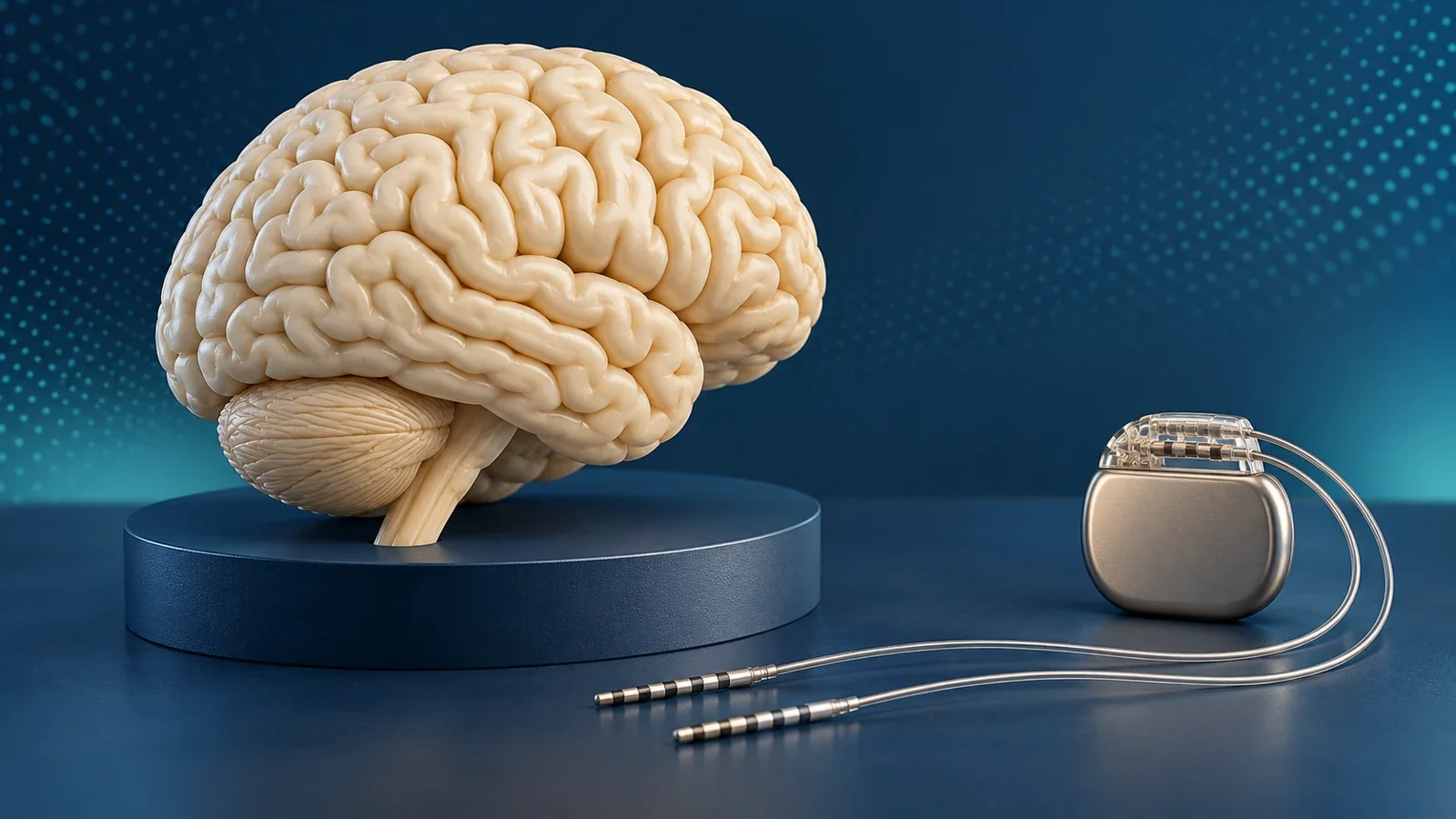
Deep brain stimulation uses electrodes in selected brain targets connected to an implanted pulse generator. Adjustable stimulation aims to modulate particular movement symptoms. Targets depend on diagnosis and dominant complaints. Risks include bleeding, infection, neurological loss and device problems. Stimulation or setting changes may adversely affect speech, balance, mood or behaviour. Programming and medicines are managed together. Lesioning procedures may be discussed selectively but differ from devices, with irreversibility requiring attention. A specialist centre determines individual suitability. DBS does not eliminate Parkinson's disease or establish that progression stops. Benefits in selected study groups cannot be generalised across diagnoses or patients. Understanding surgical and maintenance burdens is part of consent, including the need for continuing reviews rather than expecting a single procedure to complete all treatment.[1][2][4][6][7]
Follow-up and realistic expectations
Specialist assessment in İzmir
Settings change over time; initial activation does not show the complete result. Education covers battery or charging systems, appointments and device safety. Provide device details before MRI or other procedures. Wound redness, discharge, fever or sudden symptom worsening needs assessment; severe new neurological findings need emergency help. Adjust medicines through follow-up. Bring neurology records, MRI images, medicine lists and daily symptom records to Op. Dr. Ozan Ganiüsmen in İzmir. Movement disorder and functional neurosurgery input may be arranged. Define work, hobby and self-care goals. Reviews address walking, speech, mood and independence alongside device operation. Reassess outcomes and new needs over time. The patient's experience, daily activities and support requirements remain relevant even when the device itself appears to be working as intended.[1][2][5][7]
Scientific and Institutional Sources
- AANS — Deep Brain Stimulation
System, surgical principles and neurological or hardware risks
- Oxford University Hospitals — DBS pre-operative information for people with Parkinson’s disease
Symptom targets, medication response and limits regarding disease progression
- NICE — Advanced therapies: Parkinson’s disease in adults
Medication optimisation and surgical alternatives in Parkinson’s care
- NICE — Deep brain stimulation for Parkinson’s disease: recommendations
Selected patients, experienced teams, consent and clinical oversight
- Cambridge University Hospitals — Information for DBS patients leaving hospital
Programming, post-discharge monitoring and everyday safety
- Bilateral deep brain stimulation vs best medical therapy for patients with advanced Parkinson disease: a randomized controlled trial
Benefit-risk balance in selected advanced Parkinson’s patients; not generalised to other diseases
- NINDS — Deep Brain Stimulation
Different symptom targets in Parkinson’s disease, essential tremor and dystonia; national approval claims not reproduced
- NINDS — Dystonia
Causes of dystonia and selected surgical options