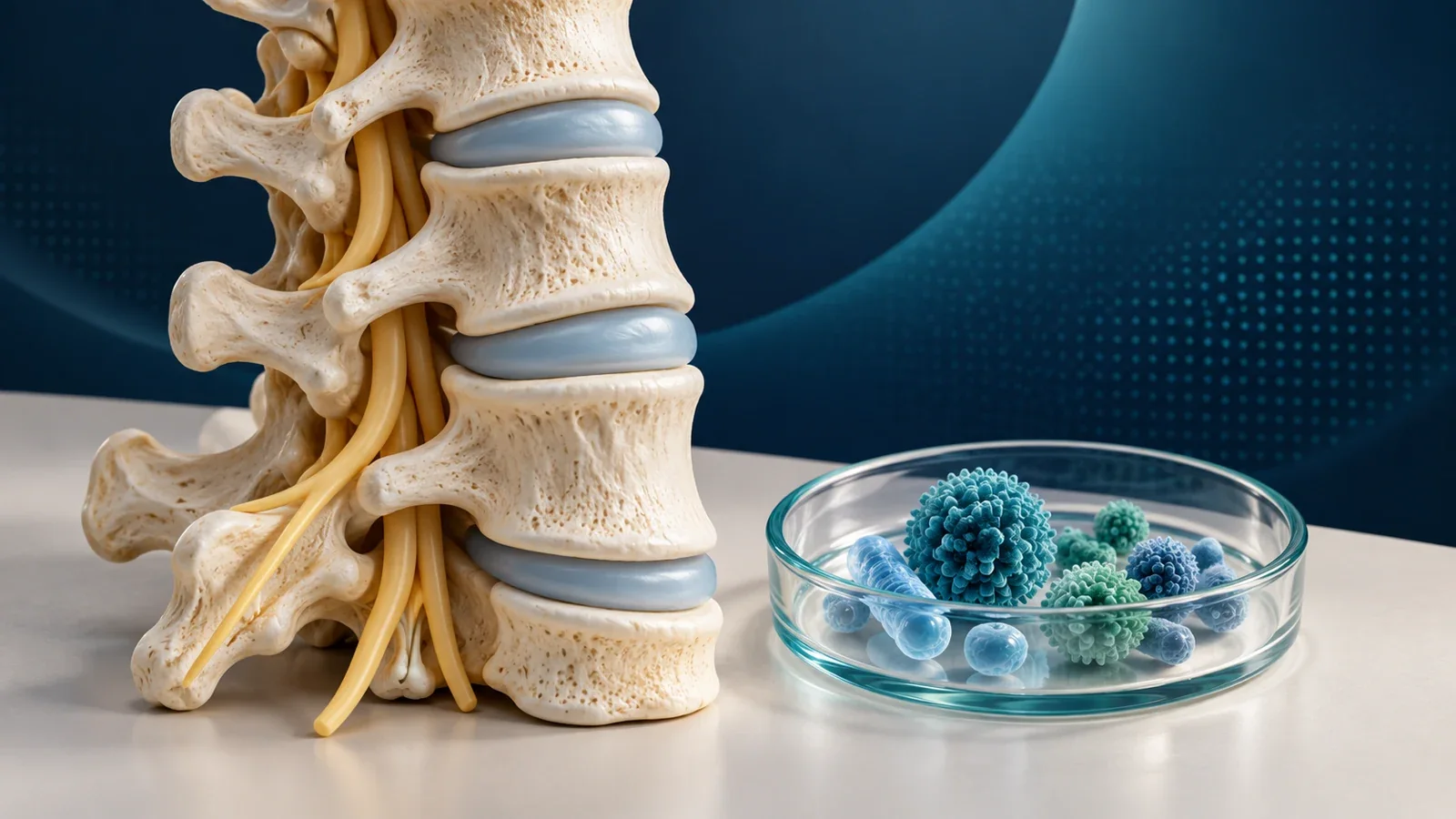
Back pain and infection
Back pain is common and may relate to strain, prolonged positioning or spinal conditions. Sometimes infection needs investigation. Pain intensity alone, or relief with painkillers, does not establish an unimportant cause. Possible infection is assessed through symptoms, history and examination together. The significance of a symptom depends on its context rather than a single feature considered in isolation.[1]
How does it differ from mechanical pain?
A herniated disc affecting a root may cause radiating arm or leg pain, numbness and sometimes weakness. Not all herniations cause symptoms and not all back pain is a disc problem. Sitting or driving may aggravate complaints without proving permanent spinal straightening. Ask about fever, chills, recent infection, spinal procedures, immunosuppression and increasing rest pain. Absence of fever does not exclude spinal infection. Clinical history helps identify which possibilities need further assessment.[1][4]
Spinal infections
Bone, disc and epidural space
The spine is a support structure of bones and discs; the cord is nervous tissue within it. The source article's confusion between them has been corrected. Vertebral infection may be called vertebral osteomyelitis, and disc infection discitis. An epidural abscess within the canal can compress nerves. Infection may spread through blood or follow surgery, but previous surgery is not required for it to occur.[1]
Bacteria are common causes; fungi or other organisms may be investigated selectively. Clinicians may request blood tests, cultures and usually MRI, with sampling in some cases. Antimicrobials reflect organism and clinical condition. Neurological loss, instability or uncontrolled infection may prompt surgery. Do not use antibiotics indiscriminately before assessment. The diagnostic and treatment plan needs to reflect the individual findings and any urgent neurological concerns.[1]
Lyme disease
Lyme disease involves Borrelia bacteria carried by infected ticks. Risk depends on location, travel and exposure. Early fever, headache, fatigue, muscle pain and an expanding rash may occur. Some untreated patients develop facial palsy, nerve pain, joint or neurological findings. Back pain alone cannot establish Lyme disease. An outdated combined American and European case count from the source has been removed. Seek medical assessment after relevant exposure with new symptoms, explaining where and when exposure occurred.[2]
Kidney and bladder infections
A urinary tract infection may start in the bladder and spread to a kidney. Kidney infection can cause fever, chills, flank or groin pain, nausea, vomiting, painful and frequent urination. Cloudy or strong-smelling urine may accompany it; colour alone is not diagnostic. These findings need prompt assessment. Treatment may involve antibiotics, with medicine and route selected according to condition and tests rather than from a general article.[3]
When is emergency help needed?
Back pain with new weakness, marked walking difficulty, numbness around the anus or altered bladder or bowel control is urgent. Fever with severe weakness, confusion, breathlessness or rapid deterioration also requires emergency help. After recent surgery, wound discharge and increasing pain need prompt contact with the procedural team. Report the change rather than waiting for routine follow-up.
Suspected infectious back pain should not be monitored only with stretching or painkillers. Primary care, emergency services, infection specialists and spinal surgery where needed may contribute. This article supports symptom awareness rather than home diagnosis. Individual assessment establishes whether infection is likely, which tests are needed and how urgently care should proceed.[1][3][4]
Scientific and Institutional Sources
- IDSA — Native Vertebral Osteomyelitis Guideline (2015)
Native spinal infection in adults; not a guide to all postoperative infections.
- CDC — Signs and Symptoms of Untreated Lyme Disease
Tick exposure and neurological findings.
- NIDDK — Kidney Infection Symptoms and Causes
Kidney infection symptoms and assessment.
- NHS — Back pain
Emergency back pain symptoms.