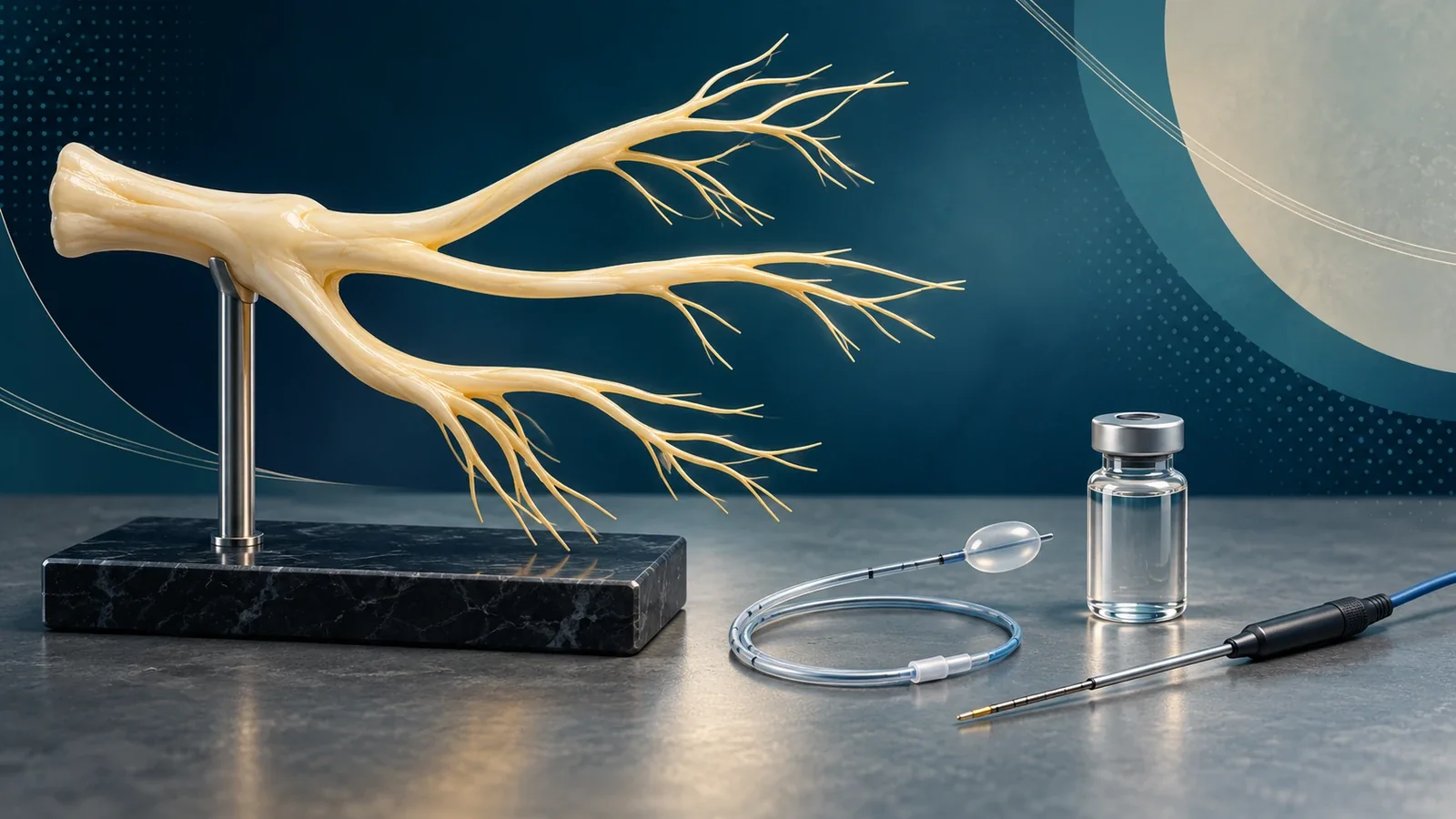
What are percutaneous procedures for trigeminal neuralgia?
Percutaneous trigeminal procedures aim for controlled effects on particular parts of the sensory trigeminal nerve. Percutaneous means access through the skin. Balloon compression, radiofrequency thermocoagulation and glycerol procedures belong here. They share an aim of affecting pain transmission but use different mechanisms and should not be treated as synonyms.[1]
They do not replace investigation of facial pain. Dental disease, jaw problems, headaches and other nerve injuries can resemble it. Attack pattern, distribution and triggers matter in diagnosis. Other diseases may affect the nerve. Selecting a procedure before clarification may create false expectations or unnecessary intervention. The patient’s description of the pain in their own words is one of the central parts of the consultation. The pattern of attacks, the area affected and the triggers matter in diagnosis, and some people may have another disease affecting the nerve. Selecting an intervention before diagnosis is clarified can lead to false expectations or an unnecessary procedure.
When might they be considered?
Medication response and personal preference
Interventions may be considered when medicines inadequately control pain or adverse effects prevent continuation. Duration, response and problems matter alongside names. Assess general fitness for open surgery, earlier procedures and imaging. The same method is not expected to be preferred for every patient. The discussion should consider both the possible benefit and consequences such as altered sensation, rather than making the decision only from age or pain intensity. Age or intensity alone is insufficient; benefit and effects such as sensory change are discussed together.[2]
Understand priorities: one patient may focus on eating-limiting attacks, another on numbness concerns. Preferences do not decide alone but form part of consent. Record pre-existing numbness. A new procedure may not reverse earlier nerve effects. Explain why open surgery, radiosurgery or medication monitoring are considered suitable or unsuitable.
The principles of balloon compression
Balloon compression creates a controlled mechanical effect around the ganglion. Hospital planning uses imaging. It does not separate a vessel from the nerve; it acts on pain transmission. Catheter and balloon positioning require specialist expertise, and this is not instruction. Anaesthesia depends on the patient and centre.[3]
Sensory changes and chewing problems may develop. Baseline and later sensation should be compared. Less pain and numbness are separate outcomes. Counting pain attacks alone may not explain the overall effect experienced by the person. Less pain together with numbness represents two separate outcomes that should be discussed independently. Follow-up should ask about eating, mouth care, eye-related symptoms and daily function, as well as whether another intervention may be necessary according to the individual course. Review nutrition, oral care, eye symptoms and function too. Whether another intervention is needed depends on the person’s own course after treatment.
Radiofrequency and glycerol procedures
Radiofrequency thermocoagulation
Radiofrequency thermocoagulation uses controlled heat to alter fibre function. Facial treatment differs from lumbar facet medial branch radiofrequency in target and risks. The same energy name does not justify comparing outcomes across regions. Explain nerve territory, expected sensory effects and plans for recurrent pain.[4]
Glycerol application
Glycerol aims for a chemical effect in the relevant nerve region. It is neither a facial filler nor a skin application, and differs from temporary local anaesthetic blocks. Selection depends on diagnosis, prior procedures, sensation and health. Explain the product and hospital application. Establishing a single ranking of these three procedures for everyone overlooks the clinical characteristics that guide the decision. Diagnosis, earlier procedures, existing sensory findings and general health all influence selection. The nature of the product and the hospital-based application should be explained clearly rather than relying on the general method name.
How do these differ from decompression and radiosurgery?
Microvascular decompression is open surgery addressing the vessel–nerve relationship in suitable patients. Percutaneous methods act on nerve transmission. Stereotactic radiosurgery focuses radiation and is separate from these three skin-access methods. Understanding distinctions helps compare centre recommendations. Onset, monitoring and complications may differ.[5]
No operation or medicine monitoring may suit some people. Assess symptom course, tolerance and daily burden. Consider later numbness and repeat needs alongside short-term relief. Different routes should not be assumed to have identical targets. Personal online accounts lack the necessary details to predict individual outcomes.
Preparation, risks and aftercare
Review MRI, medicines, blood thinners, allergies and earlier surgery. Follow written medication and fasting instructions. Do not independently stop neurological medicines. A diary, triggers and previous treatments help discussion. Transport support and same-day driving depend on anaesthetic and discharge arrangements.
Risks include numbness, unpleasant sensation, chewing difficulty, altered corneal sensation and, rarely, persistent pain with numbness. Bleeding, infection and anaesthetic problems are also assessed. Pain may persist or recur.[6] New visual problems, marked eye pain or redness, neurological loss, altered consciousness or unexpected severe symptoms need assessment. Clarify where to seek care before discharge rather than waiting for routine review.
Why discuss sensory change?
Is expected numbness unimportant?
Reduced feeling is a separate personal experience from less pain. Describe location and effects on eating or oral hygiene. Baseline sensation improves later comparison. Eye warnings need particular understanding because reduced protective sensation may mask problems. Obtain care advice from the team for the individual circumstances instead of applying recommendations given to someone else. When protective sensation is affected, the person may not experience every eye problem as pain, making a clear understanding of eye-related warnings especially important.
Review onset and progression of new complaints. The first day and later weeks may differ. Recurrence should not independently trigger repetition. Reassess diagnosis, current sensation and prior effects first, including additional effects from repeating treatment. For this reason, retaining earlier procedure reports and sharing them at a new consultation may be more useful than simply remembering the intervention’s name. The first day’s experience may differ from the situation weeks later, and the onset and evolution of new symptoms should be described at review.
Common questions and options in İzmir
Are medicines stopped immediately?
Adjustments depend on pain and medical assessment. An intervention does not permit independent stopping. Reviews cover sensation, eating, speaking and eye care alongside attacks. Previous changes matter before another method. Assess function and symptoms over time rather than only the first day.
Correct diagnosis and comparison matter for people researching trigeminal neuralgia treatment, facial radiofrequency or balloon compression in İzmir. Op. Dr. Ozan Ganiüsmen's information links the disease page with different procedures. Suitability and the treating centre require individual neurosurgical assessment. Bring MRI, medicines and previous records for a clearer discussion of history and limits.
Scientific and Institutional Sources
- NIH NIDCR — Trigeminal Neuralgia
Mechanical, chemical and thermal distinctions between balloon, glycerol and radiofrequency
- AANS — Trigeminal Neuralgia
Diagnosis, medication response and interventional assessment
- UCLH — Headache services
Facial pain procedures within a specialist team
- Northern Care Alliance — Trigeminal Ganglion Block
Ganglion procedures; local anaesthetic blocks distinguished from glycerol
- Comparison of first-time microvascular decompression with percutaneous surgery for trigeminal neuralgia
Long-term comparative clinical study; no universal superiority claim
- NHS — Trigeminal neuralgia: treatment
Numbness, corneal effects, recurrence and alternatives