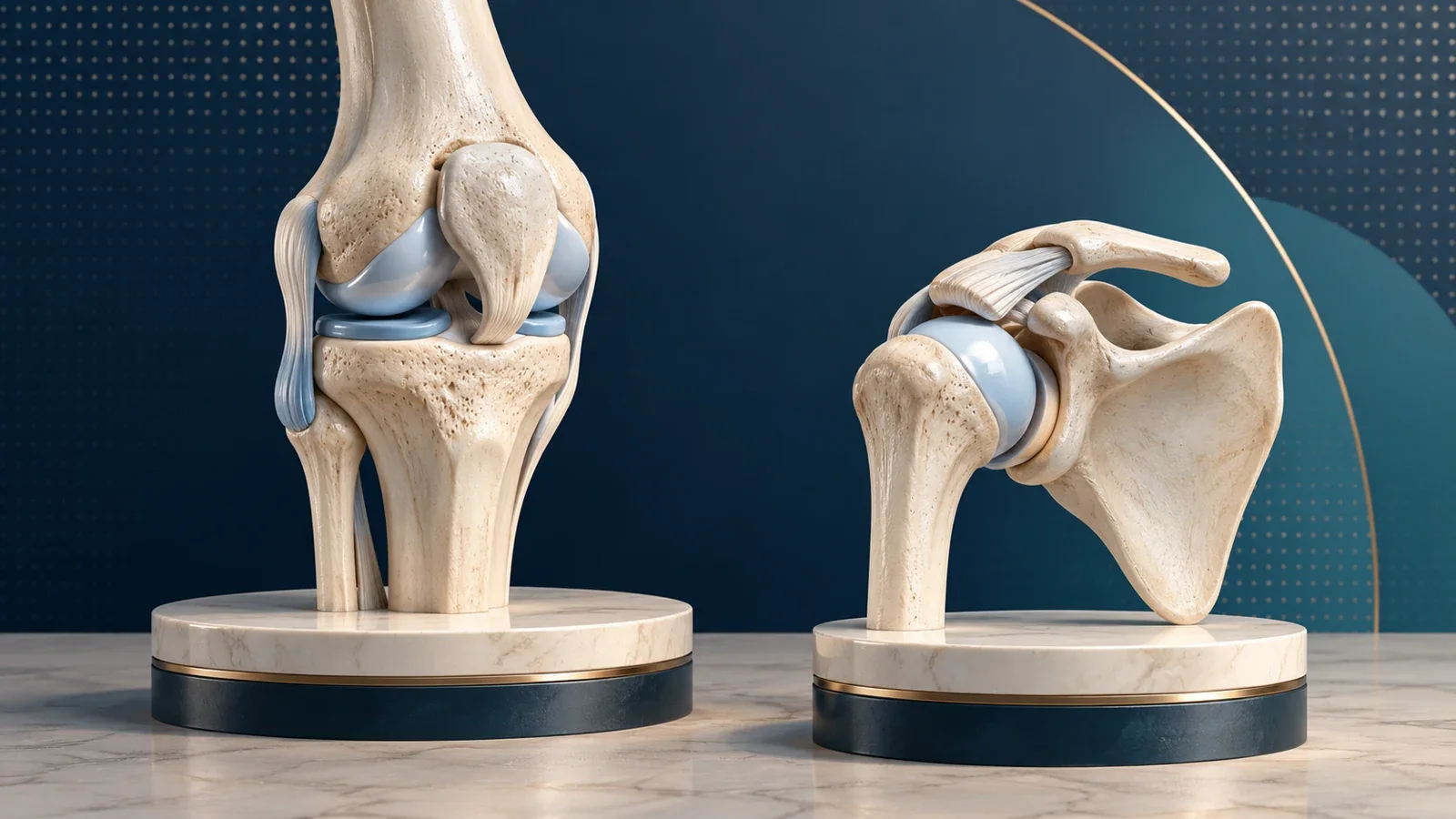
What is joint pain?
A symptom rather than a diagnosis
Joint pain can affect hands, feet, knees, hips, shoulders, the jaw and other areas. Swelling, redness, stiffness and difficulty moving may accompany it. Pain does not arise only from soft tissues between bones: cartilage, joint lining, bone and surrounding structures can contribute. Joint pain is a symptom, so its underlying cause needs investigation rather than assuming the same treatment suits everyone.[1]
What causes joint pain?
Mechanical and inflammatory causes
Strain, sprain, trauma, osteoarthritis, rheumatoid arthritis and gout are possible causes. Infections and systemic conditions such as lupus may also affect joints. Bone circulation problems, fractures or bone disease can resemble joint pain. Rare cancers and infections listed in the source article are not the leading explanation for every episode; they enter differential diagnosis according to findings. Duration, number of affected joints and associated symptoms guide assessment.
Stress and jaw joint pain
Assessing tooth clenching
Stress-related clenching may contribute to chewing muscle and jaw pain, but not every jaw pain is caused by stress. Dental assessment, reviewing habits and psychological support where appropriate may help. A jaw splint is not prescribed identically for everyone; a dentist determines suitability and use. Procedures permanently changing the bite should be approached cautiously, with the reason for the intervention and alternatives clearly explained.[2]
How is the cause investigated?
Tests selected after examination
Assessment asks about acute or chronic pain, morning stiffness, injury and fever. Blood tests, imaging or joint fluid examination may be needed according to findings. Not everyone needs every test. A hot, swollen single joint with fever, major trauma or inability to bear weight requires urgent assessment. Prompt care helps avoid missing infection, fracture or another condition needing timely treatment.[1]
The place of collagen procedures
Products and routes differ
Collagen is a component of cartilage and connective tissue, but its presence in the body does not establish that every administered product repairs a joint. Oral supplements and intra-articular procedures differ. Selected knee products have been studied; these findings do not establish effectiveness for all joints and causes. Collagen should not independently replace standard care without individual assessment of the diagnosis, evidence and treatment plan.[4]
Treatment and daily life
Suitable activity and individual care
Care addresses the underlying cause. Adapted exercise and weight management where needed are core osteoarthritis approaches. Heavy loading may be adjusted; prolonged complete inactivity is not a general solution. Suitable heat or cold may ease symptoms, with skin protected and assessment not delayed for suspected infection or marked inflammation. Medicines depend on stomach, kidney and heart conditions and other treatments. Persistent or recurrent symptoms may need primary care, rehabilitation, rheumatology or orthopaedic assessment, depending on the suspected cause.[3]
Scientific and Institutional Sources
- NIAMS — Arthritis
Joint symptoms and different diseases.
- NIDCR — TMD
Jaw pain, reversible approaches and assessment.
- NICE NG226 — Osteoarthritis
Exercise, weight management and individual treatment; not collagen endorsement.
- Intra-articular Injection of Type I Atelocollagen to Alleviate Knee Pain — RCT
Product-specific study; not generalised to all collagen products or diseases.