What is ALS?
The role of motor neurons
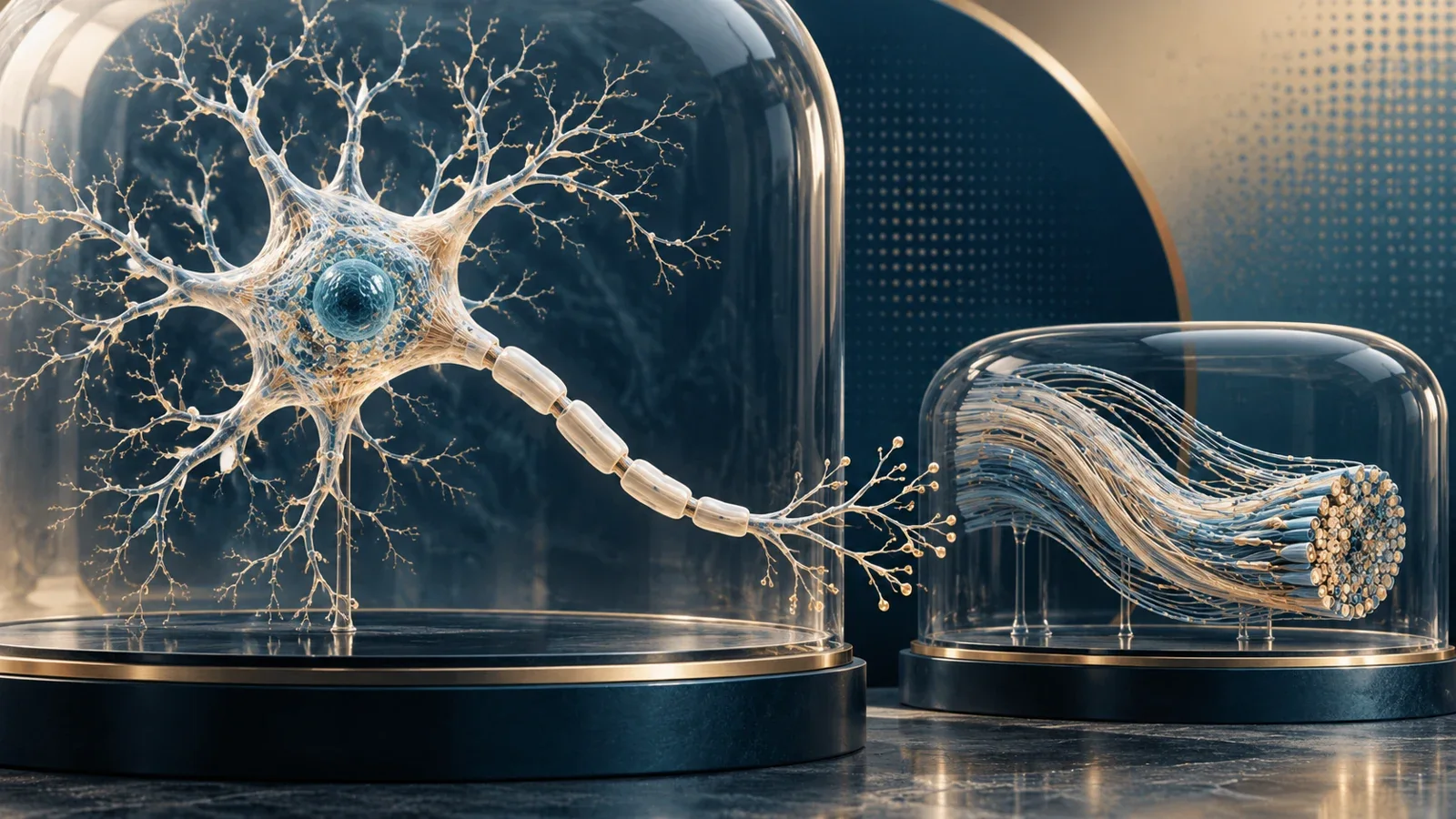
ALS is a progressive condition affecting nerve cells controlling voluntary movement, including chewing, walking and speaking. Damage to motor neurons in the brain and spinal cord causes weakness and muscle wasting over time. Breathing muscles may also be affected. Onset and progression vary between people, so a general description cannot predict an individual's precise course or support needs.[1]
What symptoms can occur?
Onset and progression
Tripping, difficulty walking or carrying objects, twitching, cramps and stiffness may occur. Less clear speech, swallowing difficulty or trouble holding the head up also need assessment. Initially, one hand, one foot or speech alone may be affected. Each symptom also occurs in conditions other than ALS. Muscle twitching by itself does not establish the diagnosis, and symptoms need interpretation with examination and clinical history.
What causes ALS?
Genetics and mechanisms under investigation
Some patients have family history and genetic changes; most have no single identified cause. Glutamate balance, protein accumulation and immune mechanisms discussed in the source article remain research topics. They should not be presented as one proven cause in every patient. Family history and appropriate genetic counselling can form part of neurological assessment according to the clinical circumstances and the questions relevant to the patient.[1]
How is ALS diagnosed?
Investigating similar conditions
Early symptoms may resemble other diseases. Examination, history, EMG and nerve conduction studies are considered together. Blood tests and selected MRI help investigate alternatives. Lumbar puncture and muscle biopsy are not mandatory for everyone; selection follows clinical suspicion. Neither a normal nor an abnormal MRI alone establishes ALS. The combination of findings and their development over time informs specialist interpretation.[1]
How are treatment and support planned?
Neurology and rehabilitation
There is currently no treatment that completely eliminates ALS. Disease-directed medicines and supportive care are available. Treatments for specific genetic subgroups do not apply to all patients. The FDA decision on tofersen concerns adults with an SOD1 mutation and does not establish access in Türkiye. Individual suitability and available care require specialist discussion.[3]
Multidisciplinary care involves neurology, respiratory, nutrition, swallowing, speech and rehabilitation teams. Communication devices, suitable mobility support and respiratory assessment may help daily life. Support needs and the patient's preferences should be reviewed as the condition changes.[2]
When should help be sought?
Safe follow-up
Progressive weakness or swallowing and speech changes need neurological assessment. Significant breathing difficulty or choking requires emergency help. Discuss weight loss, falls, sleep and breathing changes at reviews. Family care burden and patient preferences belong in planning. This information does not recommend a neurosurgical procedure: the relevant specialist team makes an individual assessment and explains appropriate treatment and support options.[2]
Scientific and Institutional Sources
- NINDS — Amyotrophic Lateral Sclerosis
Motor neurons, symptoms, diagnosis and uncertainty about causes.
- NICE NG42 — Motor neurone disease
Multidisciplinary care, breathing and nutritional support.
- FDA — SOD1-associated ALS treatment
Tofersen approval concerns a specific genetic subgroup and a US decision; it does not establish access in Türkiye.